A mini-stroke—medically known as a Transient Ischemic Attack (TIA)—occurs when blood flow to a part of the brain is temporarily blocked. Unlike a major stroke, the blockage is brief, and symptoms typically resolve within minutes to a few hours without causing permanent brain damage.
However, a TIA is a critical medical warning sign—often called a “warning stroke.” Up to a third of people who have a TIA will eventually experience a full stroke, with the highest risk occurring in the days and weeks immediately following the episode. In older adults, these symptoms can sometimes be subtle or mistaken for normal signs of aging, fatigue, or confusion.
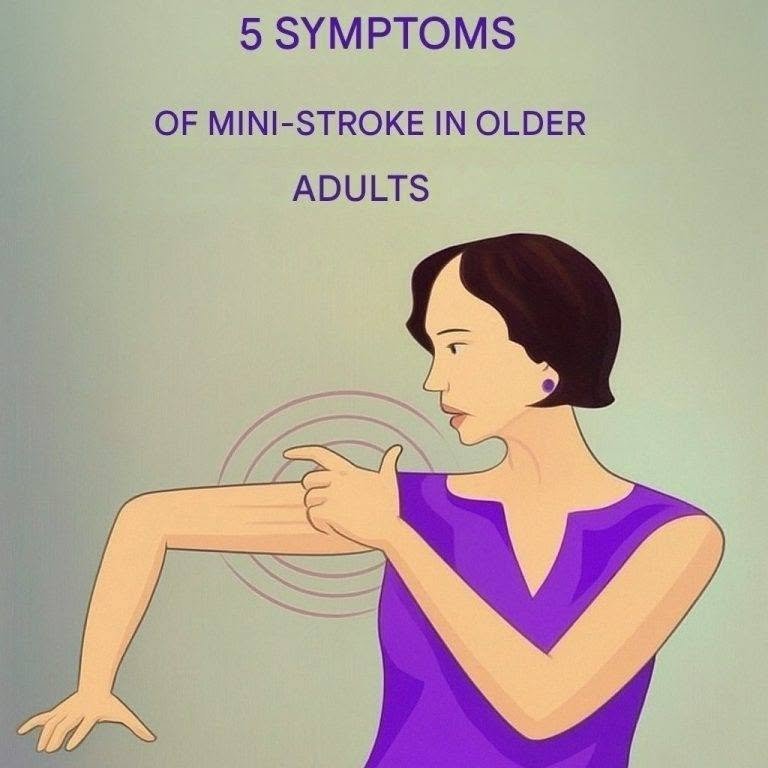
Here are 5 symptoms of a mini-stroke in older adults that should never be ignored:
1. Sudden Weakness or Numbness (Usually on One Side)
-
What it looks like: A sudden loss of strength or a heavy, numb feeling in the face, arm, or leg. If asked to raise both arms, one may drift downward involuntarily. They might struggle to hold a cup or find that one side of their mouth droops when trying to smile.
-
Why it happens: Blood flow to the area of the brain that controls movement and sensation on the opposite side of the body is temporarily interrupted.
2. Sudden Confusion, Trouble Speaking, or Difficulty Understanding
-
What it looks like: Speech may become suddenly slurred, garbled, or hard to understand. Alternatively, the person might use completely wrong words, struggle to get thoughts out, or look blank and confused when spoken to.
-
Why it happens: The blockage affects the language and cognitive centers of the brain, disrupting normal communication pathways.
3. Sudden Vision Changes in One or Both Eyes
-
What it looks like: A sudden blurring, darkening, double vision, or a temporary loss of sight—often described as a shade or curtain pulling down over one eye.
-
Why it happens: Blood flow to the retina or the visual processing centers of the brain is briefly compromised.
4. Sudden Dizziness, Loss of Balance, or Coordination Issues
-
What it looks like: A sudden, overwhelming sense of unsteadiness, a feeling that the room is spinning (vertigo), or an inability to walk straight. They may stumble, sway, or fall without a clear reason.
-
Why it happens: This typically occurs when blood flow is restricted in the cerebellum or brainstem, which regulate balance, coordination, and motor control.
5. A Sudden, Severe “Thunderclap” Headache
-
What it looks like: A sharp, blinding headache that hits with maximum intensity almost instantly, unlike any headache the person has experienced before. It may be accompanied by sudden dizziness or confusion.
-
Why it happens: While headaches are more commonly associated with hemorrhagic strokes or other vascular events, a sudden and unusual headache can sometimes accompany a TIA or signal acute vascular stress.
The Fast Test: Recognizing Stroke Signs
To help remember the most common signs of a stroke or TIA, healthcare providers use the FAST acronym:
-
F – Face Drooping: Does one side of the face droop, or is it numb?
-
A – Arm Weakness: Is one arm weak or numb? If the person tries to raise both arms, does one drift downward?
-
S – Speech Difficulty: Is their speech slurred, are they unable to speak, or are they hard to understand?
-
T – Time to call emergency services: Even if the symptoms disappear completely within a few minutes, call local emergency numbers (such as 911 or your local emergency response) immediately.
Why Immediate Medical Evaluation is Vital
Because TIA symptoms resolve on their own, people often make the mistake of ignoring them or waiting to see if they happen again. Never wait. A TIA is a medical emergency that requires immediate hospital evaluation to determine the cause of the blockage, prevent a major stroke, and start preventative treatments (such as blood thinners, blood pressure management, or lifestyle adjustments).
Are you asking because you or someone you know is currently experiencing or recently experienced these symptoms?