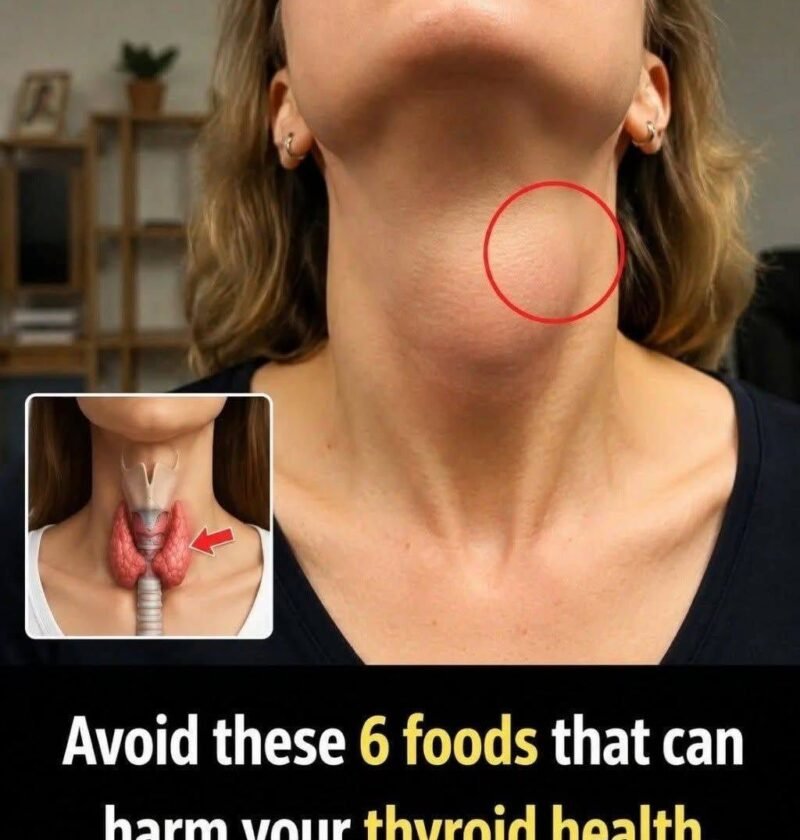
If you’re turning this into a health post, I’d soften the claim. There aren’t six foods that everyone with a thyroid condition must avoid. Some foods can interfere with thyroid function or medication under particular circumstances, while others are perfectly reasonable in normal amounts.
🦋 6 Foods & Dietary Habits to Be Careful With If You Have a Thyroid Condition
Not every food that gets labeled “bad for your thyroid” actually needs to be avoided. What matters is the type of thyroid problem you have, how much you’re consuming, and whether you’re taking thyroid medication.
Here are six things worth discussing with your doctor or pharmacist:
- Very large amounts of soy — Soy foods can be part of a healthy diet, but they may interfere with absorption of levothyroxine when consumed too close to the medication.
- Cruciferous vegetables in extremely large amounts — Foods such as broccoli, cabbage, kale, and cauliflower contain compounds that can affect thyroid hormone production in certain circumstances, particularly with inadequate iodine intake. Normal cooked portions are generally not a reason to avoid them.
- High-fiber meals taken with thyroid medication — Fiber can reduce absorption of levothyroxine in some people. Medication timing matters.
- Calcium-rich foods or supplements taken too close to levothyroxine — Calcium can significantly reduce absorption. Follow the spacing instructions provided by your healthcare professional.
- Iron supplements taken with thyroid medication — Iron can also interfere with levothyroxine absorption, so it generally needs to be separated from the medication.
- Excessive iodine — Iodine is essential for thyroid hormone production, but too much can worsen certain thyroid disorders. More iodine is not automatically better.
💡 The key message: You usually don’t need to eliminate entire food groups because you have a thyroid condition. If you take levothyroxine, taking it correctly and consistently can be just as important as what you eat.
If you have hypothyroidism, hyperthyroidism, Hashimoto’s disease, or another thyroid disorder, ask your healthcare professional for advice tailored to your condition and medication.