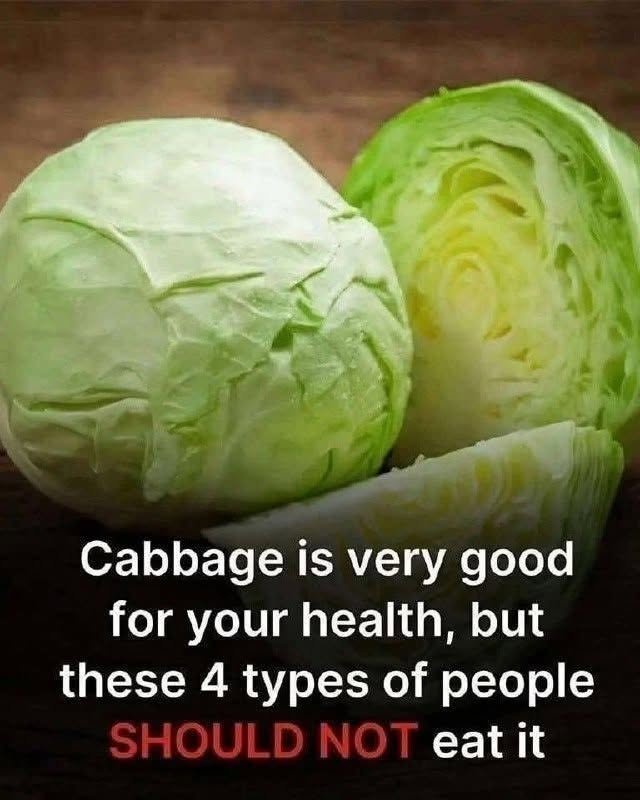
🥬 4 Types of People Who May Need to Limit or Avoid Cabbage
Cabbage is nutritious and is safe for most people. There isn’t a universal list of four groups who must avoid it, but certain people may need to limit it or discuss their intake with a healthcare professional.
- People taking warfarin
Cabbage contains vitamin K, which can affect warfarin’s action. You generally don’t need to eliminate cabbage—the important thing is keeping your vitamin K intake reasonably consistent and following your clinician’s advice. - People with digestive problems triggered by cruciferous vegetables
Cabbage contains fermentable carbohydrates that can cause gas, bloating, or abdominal discomfort, particularly in people with IBS or other sensitive digestive systems. - People with certain thyroid conditions
Cabbage and other cruciferous vegetables contain compounds called glucosinolates. For most people, normal dietary amounts aren’t a problem, but those with thyroid disease and low iodine intake should avoid consuming extremely large amounts of raw cruciferous vegetables. - People with a cabbage or cruciferous-vegetable allergy
True allergy is uncommon, but anyone who develops hives, swelling, wheezing, vomiting, or other allergic symptoms after eating cabbage should avoid it and seek medical advice.
🥗 Don’t unnecessarily avoid cabbage
For most people, cabbage is an excellent source of fiber, vitamin C, vitamin K, and other plant nutrients. Cooking it can also make it easier to tolerate if raw cabbage causes digestive discomfort.
Bottom line: Cabbage isn’t inherently dangerous for these groups. In most cases, the issue is portion size, medication consistency, individual tolerance, or an actual allergy—not a need to completely eliminate cabbage.