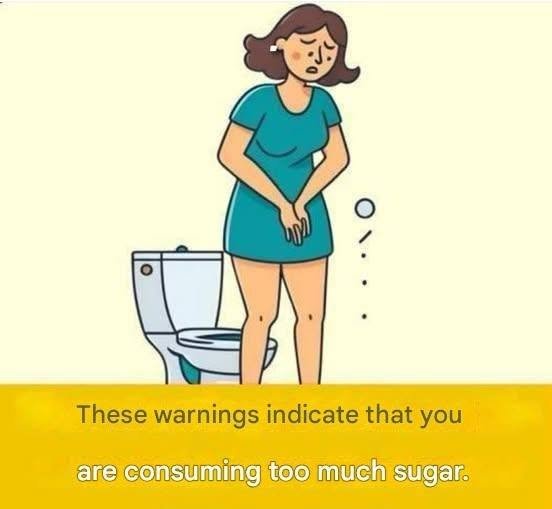
🍬 10 Warning Signs You May Be Eating Too Much Added Sugar
There isn’t a single symptom that proves you’re eating too much sugar. But a diet high in added sugars can contribute to several patterns that are worth paying attention to.
- Frequent energy highs and crashes — You may feel temporarily energized after very sugary foods or drinks, followed by tiredness or sluggishness.
- Strong cravings for sweets — Regularly wanting sugary foods can make it difficult to reduce your intake.
- Feeling hungry soon after eating — Sugary foods and drinks can provide calories without much protein or fiber, which may leave you less satisfied.
- Unintentional weight gain — Regularly consuming excess calories from sugary foods and drinks can contribute to weight gain.
- More dental problems — Sugar feeds bacteria that produce acids contributing to tooth decay.
- More sugary drinks than water — Soda, sweetened tea, energy drinks, and other sweet beverages can add substantial amounts of sugar without making you feel very full.
- Difficulty cutting back — If reducing sweets feels unusually difficult, your overall eating pattern may be heavily centered around added sugar.
- Digestive discomfort — Large amounts of certain sugary foods or sugar alcohols can cause bloating or diarrhea.
- Poor overall diet quality — A diet dominated by sweets can crowd out vegetables, whole grains, legumes, nuts, and other nutrient-rich foods.
- Elevated blood glucose — Persistently high blood sugar isn’t simply a sign that you ate too much sugar yesterday; it can indicate prediabetes or diabetes and should be evaluated with blood testing.
How much is too much?
The American Heart Association recommends limiting added sugar to no more than about 6 teaspoons (25 g) per day for most women and 9 teaspoons (36 g) for most men. These limits refer to added sugars, not naturally occurring sugars in whole fruit or plain milk.
The biggest sources are often sugary drinks, sweets, desserts, sweetened cereals, and processed foods.
One important distinction: eating sugar does not directly “cause diabetes” in a simple one-to-one way. Type 2 diabetes results from multiple factors, including genetics, body weight, physical activity, and overall diet.
If you’re experiencing excessive thirst, frequent urination, unexplained weight loss, or persistent fatigue, don’t assume it’s just from eating too much sugar—consider getting your blood glucose checked.