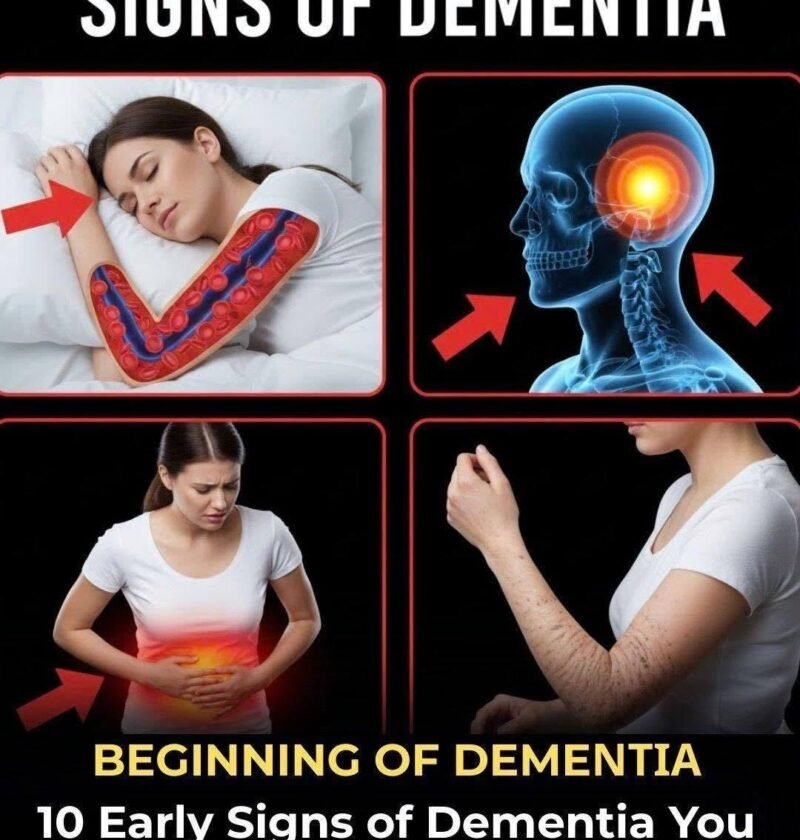
10 Early Signs of Dementia You Should Never Ignore
Dementia isn’t simply a normal part of getting older. Early symptoms can be subtle, and one occasional lapse doesn’t necessarily mean dementia. What matters is a persistent or worsening change that interferes with everyday life.
- Memory loss that affects daily life — repeatedly forgetting recent conversations, appointments, or important information.
- Difficulty with familiar tasks — struggling to follow a familiar recipe, operate a usual appliance, or complete routine activities.
- Problems finding words — frequently losing track of conversations or having increasing difficulty expressing thoughts.
- Getting confused about time or place — losing track of dates, seasons, or where you are.
- Trouble with planning and problem-solving — difficulty managing bills, medications, finances, or tasks that once seemed routine.
- Misplacing things in unusual places — putting keys in the refrigerator, for example, and being unable to retrace your steps.
- Poor judgment — making unusually risky financial decisions or showing a significant decline in personal safety or decision-making.
- Withdrawal from activities — losing interest in hobbies, social activities, or work that was previously enjoyable.
- Changes in mood or personality — unusual anxiety, irritability, suspicion, apathy, or personality changes.
- Difficulty judging distances or recognizing objects — new problems with vision and spatial awareness that aren’t explained by an eye condition.
When to get help
If these changes are persistent, progressive, or affecting independence, arrange a medical evaluation. Several treatable conditions—including medication effects, depression, vitamin deficiencies, thyroid problems, sleep disorders, and some infections—can cause dementia-like symptoms.
Sudden confusion or a sudden change in memory or behavior is different: it can indicate delirium, stroke, infection, low blood sugar, or another urgent problem and should be assessed promptly.
If you’d like, I can also give you “10 early signs of dementia that often appear while talking to someone” or a simple dementia warning-sign checklist for adults over 60.