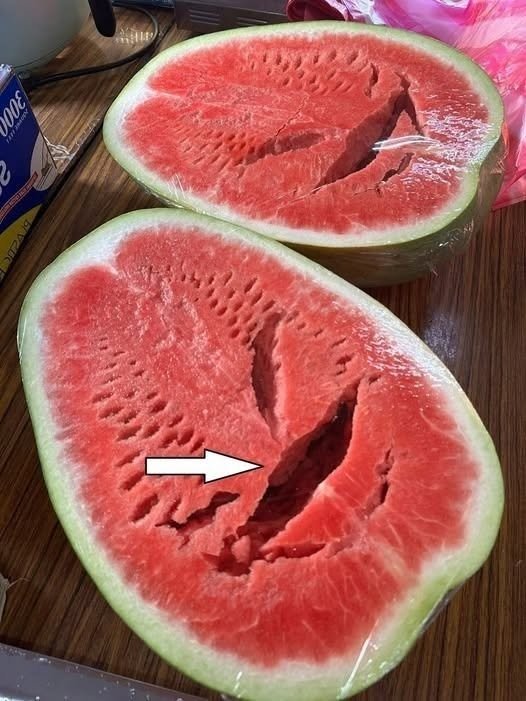
Sensational headlines on social media love to warn people to “stop eating it immediately” when they spot cracks, hollow centers, or strange cavities inside a cut watermelon.
While a cracked watermelon definitely looks alarming, agricultural experts and food safety authorities clarify that it is usually not toxic or poisonous—though it does indicate something unusual happened during the fruit’s growth.
Here is what those internal cracks actually mean, when it is safe to eat, and when you really should toss it out.
What Do the Cracks Mean? (Hollow Heart)
When you slice open a watermelon and find large internal splits, gaps, or hollow cavities radiating through the red flesh, agronomists call this condition “Hollow Heart.”
-
How it happens: Hollow heart is a natural growth anomaly that occurs during the pollination and development stage. If the weather fluctuates wildly (such as unseasonal cold spells or heavy rain) while the melon is growing, or if plant growth regulators disrupt normal cell division, the outer rind grows faster than the internal flesh. This tears the interior tissue apart, creating internal cracks and voids.
-
Is it safe to eat? Yes, generally. Hollow heart does not mean the fruit is infected with bacteria or harboring dangerous chemicals. The flesh is simply stretched and dried out inside. However, because of the physical stress it underwent, the melon is often woody, mealy, dry, or lacking in sweetness. It won’t hurt you, but it probably won’t taste very good.
When Should You Stop Eating It Immediately?
While structural cracks from hollow heart are harmless, there are other signs of spoilage where the internet’s warning to “stop eating it immediately” is entirely correct:
1. Slime, Mushy Texture, and Foul Odor
If the cracks are accompanied by a slimy texture, a mushy, water-soaked collapse of the flesh, or a pungent, fermented, or sour odor, the watermelon has begun to rot. Bacteria and molds have invaded the interior. Do not taste it—toss it out.
2. Black, White, or Gray Mold Pockets
If you notice fuzzy mold growing inside the cavities or around the seeds, it means air and spores found their way through a microscopic crack in the rind. Eating moldy fruit can cause acute food poisoning or allergic reactions.
3. The “Exploding” Watermelon (Fermentation)
If a watermelon is left too long in the heat, internal sugars can begin to ferment anaerobically, producing gas. If a watermelon smells like alcohol, is fizzy, or literally hisses/bursts when you cut into it, it is heavily fermented and spoiled. Discard it immediately.
💡 The Rule of ThumbIf the watermelon just has dry, split gaps (hollow heart) inside, smells fresh and fruity, and looks normal otherwise, it is safe to eat—though you might want to use the less-woody parts for a smoothie rather than slicing it up. If it smells sour, looks slimy, or has mold, throw it away.
Have you ever cut into a watermelon and found it hollow or dry inside, or were you checking out a warning you saw online?