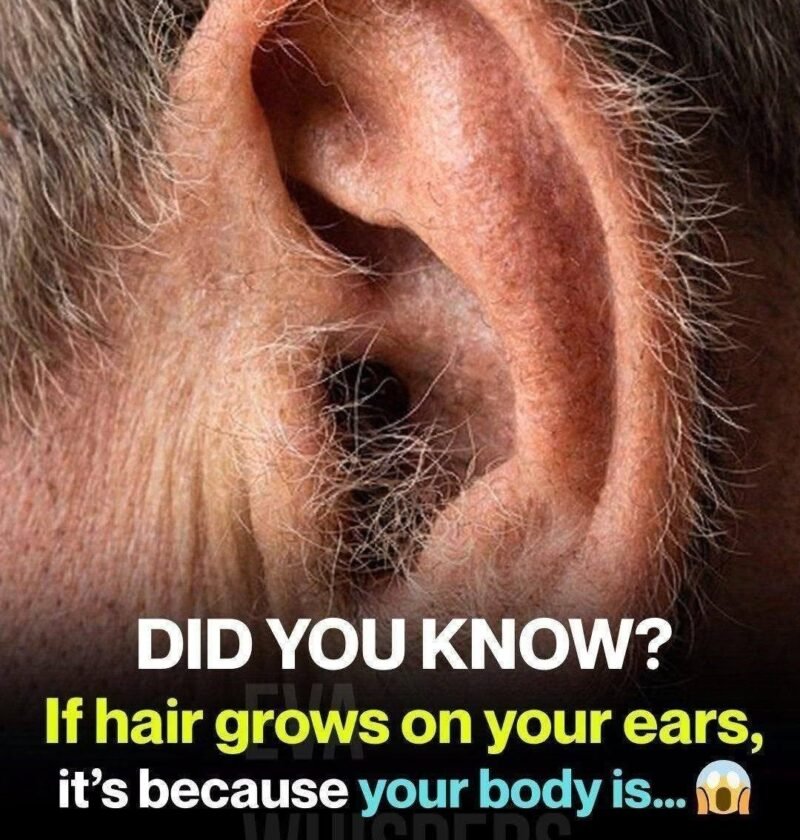
What Does Ear Hair Say About Your Health? 👂
Usually, not much. Ear hair is a normal part of aging and is influenced largely by genetics and hormones. As people—especially men—get older, hair can become more noticeable around the outer ear.
A few things to know:
- More ear hair doesn’t mean you have heart disease. Claims that ear hair is a reliable warning sign of coronary artery disease aren’t supported well enough to use ear hair as a medical test.
- It can increase with age. Hormonal changes and genetics can make facial and ear hair thicker or longer.
- It isn’t a sign of poor hygiene. Visible ear hair is normal and doesn’t mean the ears are dirty.
- Sudden, unusual hair growth elsewhere on the body can sometimes be related to medications or hormonal conditions and is worth discussing with a clinician if it’s accompanied by other changes.
✂️ Should you remove it?
If you don’t like the appearance, you can carefully trim visible outer-ear hair with an appropriate trimmer. Avoid inserting scissors, cotton swabs, or other objects deep into the ear canal, where they can cause injury or push wax If you’re concerned about your health, symptoms such as chest pain, shortness of breath, unexplained weight loss, or persistent fatigue are much farther inside.
Bottom line: Ear hair is usually simply ear hair—not a hidden diagnosis. If you’re concerned about your health, symptoms such as chest pain, shortness of breath, unexplained weight loss, or persistent fatigue are much more meaningful than the amount of hair on your ears.