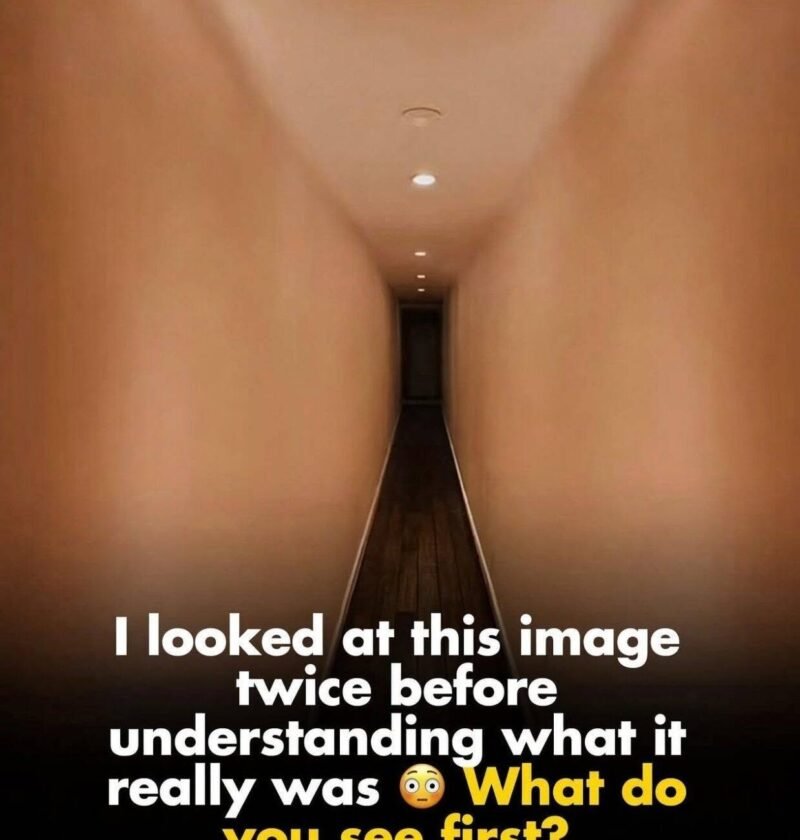
Optical illusions and ambiguous images that shift depending on what you notice first are a staple of internet fascination. Whether you see a young woman or an old crone, a duck or a rabbit, or two faces versus a candlestick, these visual puzzles capture our attention because they reveal how actively our brains construct reality.
When you encounter an illusion that asks, “What do you see first?”, your visual system is undergoing a fascinating split-second competition. Here is what is actually happening inside your brain when you look twice:
1. The Brain’s “Top-Down” vs. “Bottom-Up” Processing
-
Bottom-Up Processing (Sensory Input): Your eyes capture raw data—lines, shapes, contrast, and edges—and send signals directly to the primary visual cortex at the back of your brain.
-
Top-Down Processing (Expectation & Experience): Simultaneously, higher-level cognitive centers in your brain (like the frontal and temporal lobes) jump in, using your past memories, cultural context, and expectations to guess what that visual data should represent.
-
The Result: When an image has dual interpretations, your brain often picks the one that matches your immediate cognitive bias or what your eyes happened to focus on first, locking in one image before you consciously realize a second one is hidden there.
2. Figure-Ground Segregation
-
The Gestalt Principle: The human brain naturally organizes visual scenes into a figure (the main object of focus) and a ground (the background).
-
In classic ambiguous illusions (like Edgar Rubin’s famous face-vase illusion), the lines separating light and dark areas belong to both shapes simultaneously. Your brain has to make a choice: does the dark shape represent a silhouette, or does the white shape represent a goblet? It cannot compute both as the primary figure at the exact same millisecond, which is why your perception “flips” back and forth when you look twice.
3. Neural Adaptation and Fatigue
-
Why It Flips: If you stare at an optical illusion for more than a few seconds, you might notice the image suddenly “switching” to the alternative interpretation. This happens because the neurons firing for your initial perception experience temporary fatigue (neural adaptation), allowing the alternate neural pathway to take over and bring the hidden image into focus.
What Does It Reveal About Your Personality?
Just like the triangle-counting puzzles, these quizzes often claim your first glance reveals whether you are an optimist, a logical thinker, or an emotional introvert.
In reality, it doesn’t reveal your deepest psychological traits. Instead, it reflects micro-factors in the exact fraction of a second you looked at the image:
-
Which side of the image your fovea (the center of your retina) happened to land on first.
-
Subtle differences in contrast sensitivity or lighting on your screen.
-
Whether your brain was momentarily primed for one concept over another based on your immediate environment.