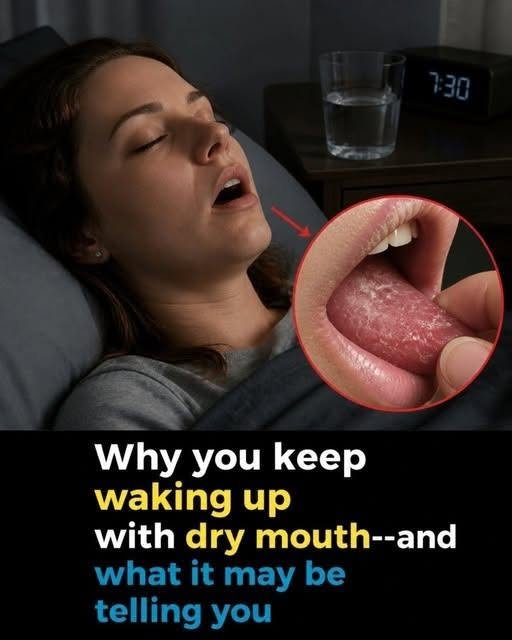
Waking Up With a Dry Mouth? Here’s What It Could Mean
Occasionally waking with a dry mouth is common and usually isn’t serious. But persistent morning dry mouth can sometimes point to an underlying issue.
7 possible causes
- Breathing through your mouth while sleeping
A blocked nose, allergies, or sleeping with your mouth open can dry the mouth overnight. - Snoring or sleep apnea
People with obstructive sleep apnea often breathe through their mouth and may wake with a very dry mouth. Loud snoring, gasping during sleep, morning headaches, or significant daytime sleepiness are reasons to seek evaluation. - Dehydration
Not drinking enough fluids, heavy sweating, fever, vomiting, or diarrhea can reduce saliva production. - Medications
Many commonly used medicines—including some antihistamines, antidepressants, blood-pressure medications, and decongestants—can cause dry mouth as a side effect. - Alcohol or tobacco
Alcohol can contribute to dehydration, while smoking and other tobacco products can reduce or alter saliva production. - High blood sugar
Persistent thirst and dry mouth can occur with diabetes, particularly when accompanied by frequent urination, fatigue, or unexplained weight loss. - Reduced saliva production
Certain medical conditions and treatments can affect the salivary glands and cause ongoing dry mouth.
🦷 Don’t ignore persistent dry mouth
Saliva protects your teeth and mouth. Long-term dry mouth can increase the risk of tooth decay, gum problems, mouth sores, and difficulty swallowing or speaking.
You can try drinking enough water throughout severe, or occurs with excessive thirst, frequent urination, difficulty swallowing, or significant sn the day, treating nasal congestion when appropriate, avoiding excessive alcohol and tobacco, and using sugar-free gum or lozenges to stimulate saliva.
If dry mouth persists for several weeks, is severe, or occurs with excessive thirst, frequent urination, difficulty swallowing, or significant snoring/daytime sleepiness, it’s worth discussing with a doctor or dentist.
One morning of dry mouth usually isn’t a warning sign by itself—the pattern and accompanying symptoms matter most.