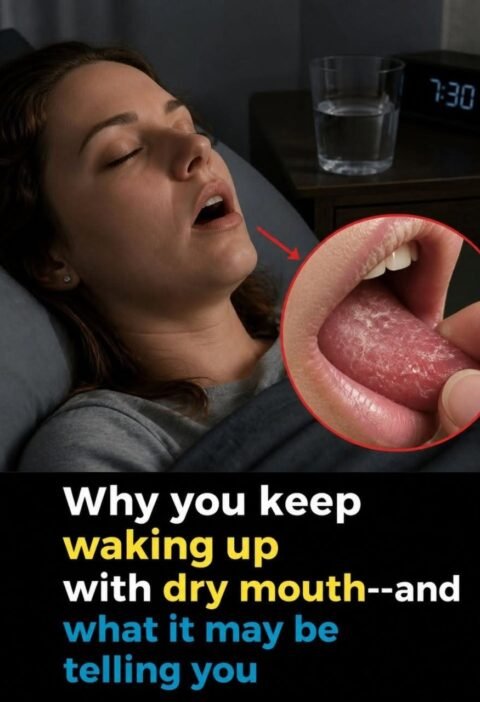
Waking Up With a Dry Mouth? Here’s What It Might Be Telling You
An occasional dry mouth in the morning is common. During sleep, saliva production naturally decreases, but persistent morning dryness can have several causes.
7 possible reasons
-
Mouth breathing — Nasal congestion, allergies, or sleeping with your mouth open can dry the mouth overnight.
-
Snoring or sleep apnea — People who breathe through their mouth while sleeping may wake with a very dry mouth.
-
Dehydration — Not getting enough fluids, particularly after heavy sweating, fever, vomiting, or diarrhea, can contribute.
-
Medications — Many medicines, including some antihistamines, antidepressants, and blood-pressure medicines, can reduce saliva production.
-
Alcohol or tobacco — Both can contribute to dryness and can negatively affect oral health.
-
Diabetes or high blood sugar — Persistent dry mouth accompanied by unusual thirst and frequent urination can be a reason to have blood glucose checked.
-
Reduced saliva production — Certain medical conditions and treatments can affect the salivary glands.
What can you do?
Drink according to thirst, keep your bedroom comfortably humidified if the assume you need to drink huge amounts of water before bed—this can simply lead to more nighttime urination and doesn’t necessarily solve air is very dry, address nasal congestion appropriately, and maintain good dental hygiene. Sugar-free gum can stimulate saliva production for some people.
Don’t assume you need to drink huge amounts of water before bed—this can simply lead to more nighttime urination and doesn’t necessarily solve the underlying problem.
When to get checked
See a healthcare professional or dentist if dry mouth persists for several weeks, or if you develop difficulty swallowing, persistent mouth sores, significant tooth decay, or unusual thirst and frequent urination.
If you snore loudly, wake up gasping or choking, have witnessed pauses in breathing, or feel excessively sleepy during the day, ask a clinician about possible sleep apnea.