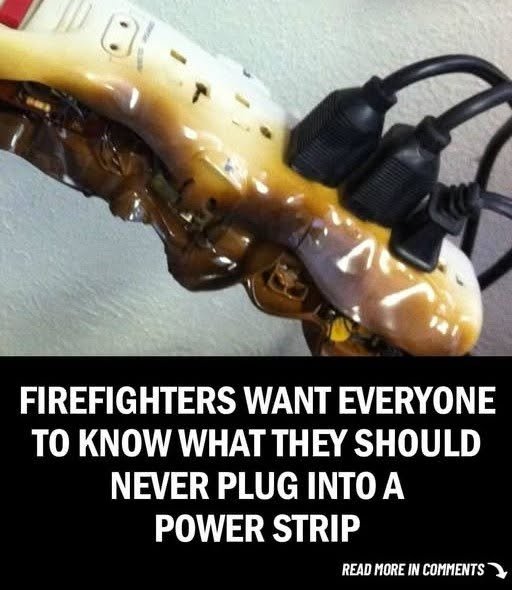
A power strip is designed for devices that draw relatively modest amounts of electricity. Plugging high-power appliances into one can overload the strip, cause overheating, or create it with a power strip. When in doubt, use a properly grounded wall outlet on a fire risk.
Things you generally shouldn’t plug into a power strip
-
Space heaters — They can draw a large amount of power continuously and are a common overload risk.
-
Air conditioners — Especially portable or window units; their startup and running current can be too much for a typical power strip.
-
Refrigerators and freezers — Their compressors have significant startup loads, so a wall outlet is generally preferable.
-
Microwaves — They typically consume substantial power and should normally be connected directly to an appropriate wall outlet.
-
Electric ovens or hot plates — Heating appliances can draw very high current.
-
Washing machines and dryers — Their motors and heating elements can place heavy demands on electrical circuits.
-
Dishwashers — Heating elements can create a substantial electrical load.
-
Large power tools — Saws, compressors, and similar equipment can have high startup currents.
-
Another power strip or extension cord — “Daisy-chaining” strips can increase the risk of overloading the circuit.
A good rule
If an appliance heats, cools, or uses a powerful motor, check its manual and electrical requirements before using it with a power strip. When in doubt, use a properly grounded wall outlet on an appropriately rated circuit.
Also, never exceed the power strip’s rated current/wattage, and don’t use a damaged, hot, buzzing, or visibly worn strip.
If you want, I can also give you a list of 10 everyday devices that are safe to plug into a power strip.