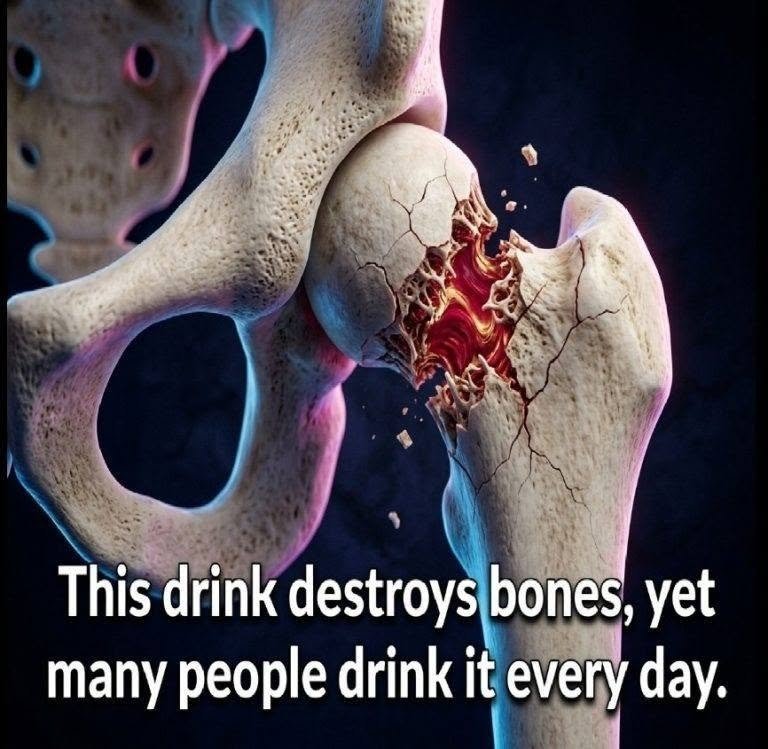
🦴 5 Drinks That Can Be Harmful to Bone Health When Consumed Excessively
There isn’t a scientifically established list of five drinks that are simply “bad for your bones.” The amount you drink and what those beverages replace in your diet matter. Some drinks can contribute to poorer bone health when consumed heavily. Bone Health & Osteoporosis Foundation+1
1. 🍺 Excessive alcohol
Heavy alcohol consumption is one of the clearest beverage-related risks for bone health. It can interfere with nutrition and bone metabolism and increases the risk of falls and fractures. International Osteoporosis Foundation+1
2. 🥤 Cola and some soft drinks
Some studies have associated cola consumption with poorer bone outcomes, but it’s incorrect to say that carbonation itself “leaches calcium from bones.” The possible concerns include caffeine, phosphoric acid, and—importantly—soft drinks displacing more nutritious beverages such as milk. Bone Health & Osteoporosis Foundation+1
3. ⚡ High-caffeine energy drinks
Large amounts of caffeine can modestly affect calcium absorption and urinary calcium loss. Energy drinks can also contain substantial added sugar. The concern is primarily excessive caffeine intake and poor overall nutrition, rather than an occasional caffeinated drink destroying bone. International Osteoporosis Foundation+1
4. ☕ Excessive coffee
Moderate coffee consumption isn’t generally considered a major threat to bone health. However, very high caffeine intake, particularly when calcium intake is inadequate, may have unfavorable effects. Bone Health & Osteoporosis Foundation+1
5. 🥤 Sugary soft drinks
Regular consumption of sugar-sweetened beverages can contribute to a dietary pattern that provides fewer bone-supporting nutrients. Some observational research has linked high soft-drink consumption with poorer bone outcomes, although this doesn’t prove that the drink itself directly causes osteoporosis. PubMed Central (PMC)+1
🦴 What should you drink instead?
For bone health, prioritize water, milk or calcium-fortified alternatives, and other nutritious beverages that help you meet your calcium and vitamin D needs. Adequate calcium, vitamin D, protein, and weight-bearing exercise are much more important than avoiding carbonation altogether. International Osteoporosis Foundation+1
Bottom line: You don’t need to panic about an occasional soda or cup of coffee. The bigger concerns are heavy alcohol use, excessive caffeine, frequent sugary/cola drinks, and a diet that doesn’t provide enough calcium and other nutrients.
Sources