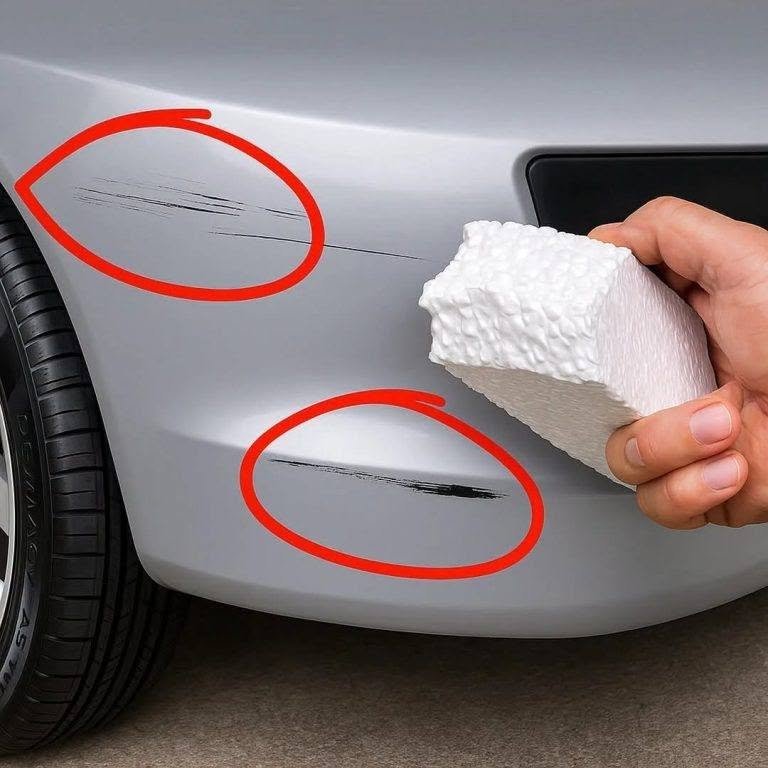
How to Remove Minor Car Scratches With Foam
If by “foam” you mean a car polishing or scratch-removal foam pad, it can improve the appearance of very light surface scratches in a few minutes. It won’t repair deep scratches that have reached the paint or metal.
Step-by-step
- Wash the area first
Remove dirt and grit with car shampoo and water. Dry with a clean microfiber towel. Never polish over a dirty surface. - Check the scratch
Run a clean fingernail gently across it. If your nail doesn’t catch, it’s more likely a superficial clear-coat scratch that polishing may improve. If it catches deeply, professional repair or touch-up paint may be needed. - Use a scratch-removal polish
Put a small amount of automotive polishing compound on a foam applicator pad. Don’t use household cleaning products or abrasive kitchen sponges. - Work a small section
Gently rub the product over the scratch using overlapping motions and light-to-moderate pressure. Follow the product’s instructions—some compounds are designed for hand application, while others are intended for a machine polisher. - Wipe and inspect
Remove residue with a clean microfiber towel. Check the area in good light. Repeat only if the product instructions allow it. - Protect the paint
Once you’re satisfied, apply a suitable automotive wax or sealant to the treated area.
⚠️ Know when to stop
If you can see primer or bare metal, there’s a deep gouge, or the paint is peeling, polishing foam won’t truly fix it. Continuing to polish can remove more clear coat without repairing the underlying damage.
Also, test the product on a small inconspicuous area first, particularly on a dark or freshly repainted vehicle.