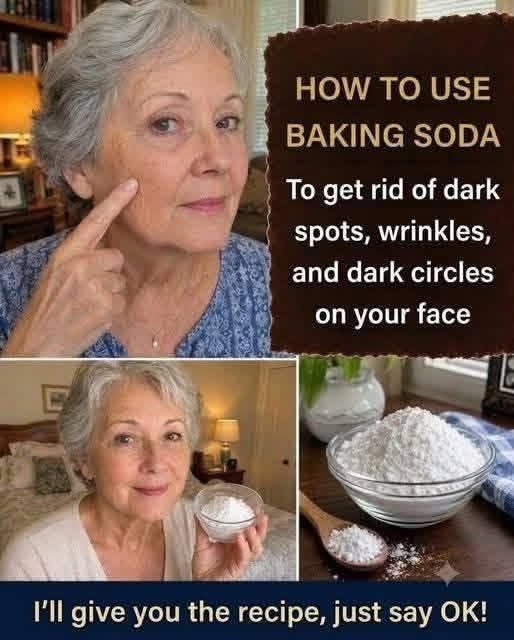
Baking Soda on the Face: Benefits, Risks, and Safer Alternatives
Baking soda is often promoted online as a cheap facial cleanser, exfoliant, or acne treatment. But it’s not an ideal routine facial product. Baking soda is alkaline, while healthy facial skin has a mildly acidic surface (the skin barrier), so frequent application can cause irritation and dryness.
Possible effects
- It may temporarily remove oil and dead skin cells because of its abrasive and alkaline properties.
- However, there’s no good evidence that baking soda safely treats wrinkles, dark spots, or acne.
- Repeated use can disrupt the skin barrier, leading to dryness, burning, redness, itching, or increased sensitivity.
⚠️ If you still want to try it
The safest option is actually to avoid using kitchen baking soda as a facial treatment, particularly if you have sensitive skin, eczema, rosacea, or broken skin.
Never use it around the eyes, and don’t combine it with other potentially irritating ingredients such as lemon juice, vinegar, strong acids, or harsh scrubs.
If you experience burning, swelling, or persistent redness after applying it, rinse thoroughly with lukewarm water and stop using it.
Better options
For everyday facial care, use a gentle cleanser and fragrance-free moisturizer. For specific concerns:
- Acne: products containing salicylic acid or benzoyl peroxide may be more appropriate.
- Dark spots: sunscreen and proven ingredients such as vitamin C or azelaic acid can help.
- Fine lines: daily sunscreen and appropriately formulated retinoids have substantially better evidence.
Bottom line: Baking soda isn’t a miracle skin treatment. The potential irritation generally outweighs any short-term cosmetic benefit, and there are gentler products specifically formulated for facial skin.