🩸 Silent Warning Signs of High Cholesterol
The most important thing to know is that high cholesterol usually has no symptoms at all. You generally can’t tell from how you feel or how you look. A blood test is the reliable way to find out whether your cholesterol is elevated.
Possible visible clues
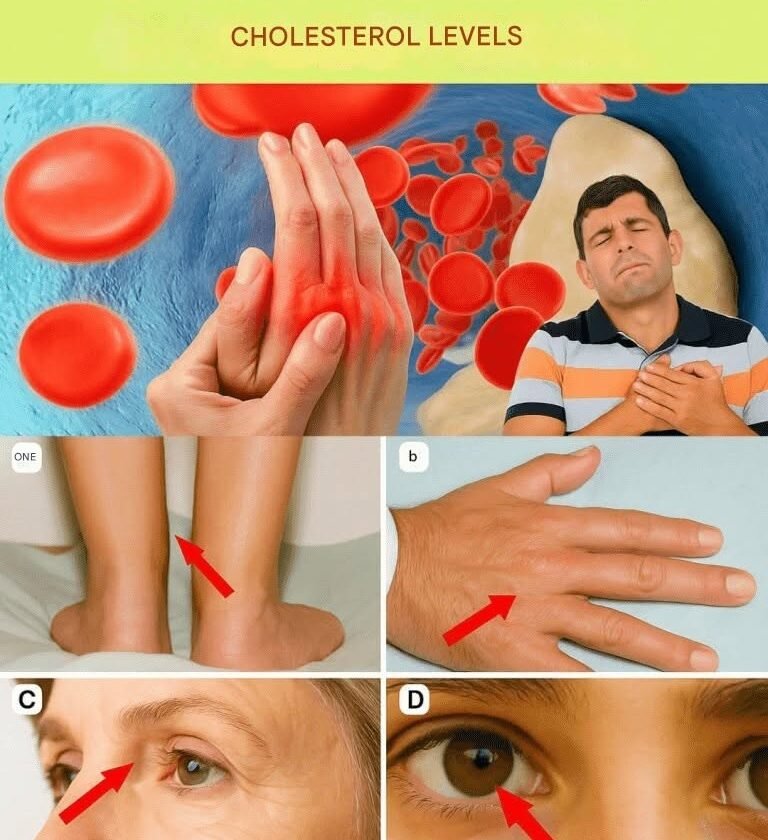
In some people with very high cholesterol, particularly inherited forms such as familial hypercholesterolemia, certain physical findings can occur:
- Yellowish patches around the eyelids (xanthelasma)
- Yellowish cholesterol deposits in tendons, especially around the Achilles tendon or hands (xanthomas)
- A gray-white ring around the cornea (corneal arcus), especially when it appears at a young age
These findings don’t prove that cholesterol is high. For example, corneal arcus is common with aging.
What high cholesterol can actually do
Over time, high LDL (“bad”) cholesterol can contribute to plaque buildup in arteries (atherosclerosis). This raises the risk of coronary heart disease, heart attack, stroke, and peripheral artery disease—but these complications can develop without noticeable warning symptoms.
🩺 The best way to detect it
Ask your healthcare professional about a lipid panel, which typically measures LDL cholesterol, HDL cholesterol, total cholesterol, and triglycerides.
Don’t wait for physical symptoms to appear before checking your cholesterol, particularly if you have a family history of early heart disease, diabetes, high blood pressure, obesity, or other cardiovascular risk factors.
Bottom line: There really aren’t reliable “silent warning signs” that you can detect yourself. High cholesterol is silent precisely because you may feel completely healthy while LDL is contributing to artery disease. Regular screening is far more useful than looking for changes around your eyes or skin.