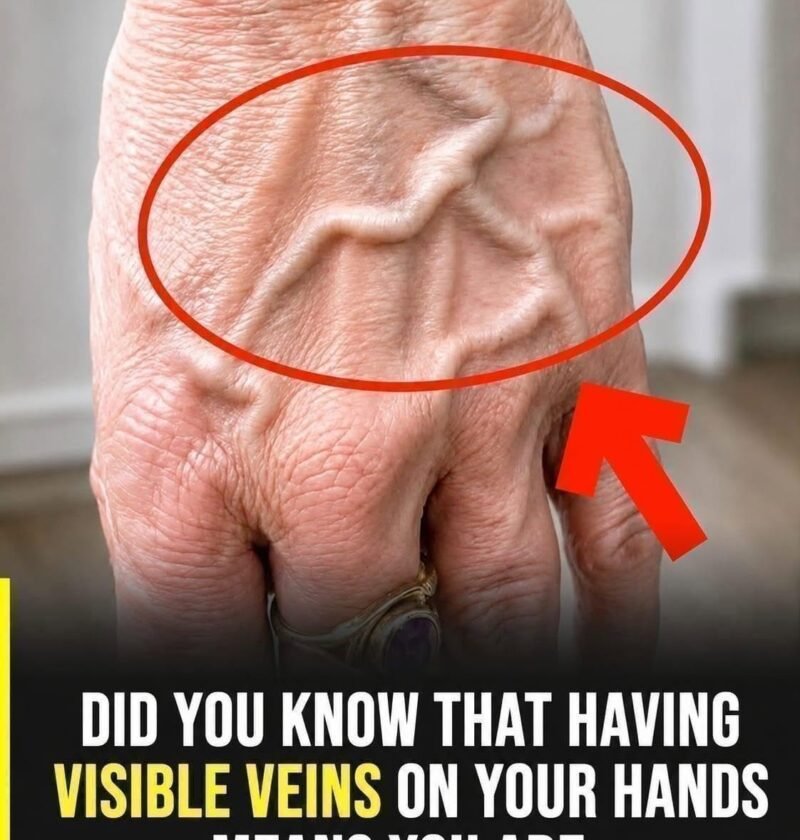
Visible veins are extremely common and usually entirely harmless. How noticeable your veins are depends heavily on biological factors like skin tone, body fat percentage, and genetics. However, when veins suddenly become more prominent, swollen, or painful, they can sometimes signal an underlying vascular issue.
Normal, Harmless Causes of Visible Veins
For most people, seeing prominent veins is simply a matter of anatomy rather than disease:
-
Low Body Fat: Less subcutaneous fat means less padding between your skin and your vascular network, making veins naturally more visible (especially on the hands, arms, and legs).
-
Aging and Thinning Skin: As we age, our skin loses collagen and thins out, and the supportive tissues weaken, allowing veins to show through more clearly.
-
Genetics: If your parents or grandparents have fair, thin skin or prominent veins, you likely inherited that physical trait.
-
Exercise and Heat: During a workout, your blood vessels dilate (vasodilate) to push warm blood closer to the skin’s surface to cool you down, temporarily making veins bulge. Warm weather does the same thing.
-
Pregnancy: Increased blood volume and hormonal changes that relax blood vessel walls often cause temporary visible veins or spider veins.
When Visible Veins Indicate a Health Issue
While normal veins are flat, soft, and painless, certain changes indicate that your circulatory system is under stress:
-
Varicose Veins: These are enlarged, twisted, and raised veins that usually appear in the legs. They happen when tiny one-way valves inside the veins weaken, causing blood to pool backward instead of flowing smoothly up to the heart.
-
Spider Veins (Telangiectasias): These are tiny, thread-like red, blue, or purple lines close to the surface of the skin. While usually cosmetic, they can sometimes point to underlying venous insufficiency.
-
Chronic Venous Insufficiency (CVI): If varicose veins are left untreated, the high pressure in the veins can cause chronic swelling, skin discoloration (brownish staining), heaviness in the legs, or even venous ulcers.
Red Flags: When to See a Doctor
Most visible veins do not require medical intervention, but you should consult a doctor or a vein specialist (phlebologist) if you experience any of the following warning signs:
-
Pain, aching, or a heavy, throbbing sensation in your legs, especially after standing for long periods.
-
Swelling in your lower legs, ankles, or feet.
-
Skin changes near the veins, such as dryness, itching, hardening of the skin, or a brownish discoloration.
-
A sore, ulcer, or open wound near the ankle that is slow to heal.
-
A vein that suddenly becomes hard, warm, red, or tender to the touch (which can indicate superficial thrombophlebitis, a blood clot in a surface vein).