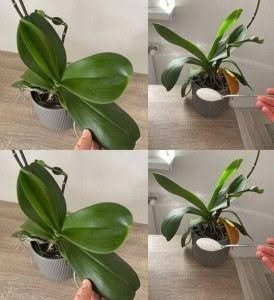
When viral gardening videos claim that adding “just one tablespoon” of a secret household ingredient to your orchids will make them bloom non-stop, they are usually talking about pantry staples like rice water, Epsom salt, crushed banana peels, or cinnamon water.
While these homemade mixtures contain helpful trace nutrients, treating orchids like regular garden plants often leads to root rot rather than endless blooms. Orchids (Phalaenopsis and others) are epiphytes—meaning in nature, they grow on the bark of trees with their roots exposed to air, not buried in heavy soil.
The Truth Behind Popular DIY Orchid “Fertilizers”
-
Rice Water: Starch and a little potassium from rinsing rice can feed a plant, but raw or leftover starchy water can also feed harmful bacteria and fungi in the orchid’s potting medium, leading to mold and root rot.
-
Epsom Salt (Magnesium Sulfate): Provides magnesium and sulfur, which can boost chlorophyll production and green up leaves. However, over-application causes mineral salt buildup that burns delicate orchid roots.
-
Cinnamon: Has natural antifungal properties and can be dusted directly onto a cut or wounded root to prevent infection, but dumping it into the pot as a fertilizer doesn’t actually provide macronutrients.
-
Banana Peel Water: Soaking banana peels releases potassium, but it can ferment quickly, attracting fungus gnats and souring the potting mix.
What Actually Makes Orchids Bloom Non-Stop
Orchids don’t bloom because of a single magic tablespoon; they bloom when they receive the specific environmental cues that signal it is time to reproduce. If your orchid has green leaves but refuses to push out a flower spike, look at these four real triggers:
-
The Temperature Drop (The Ultimate Trigger): Most common indoor orchids (Phalaenopsis) need a slight night-to-day temperature shift—about 10°F to 15°F cooler at night (around 55°F to 60°F / 13°C to 15°C) for a few weeks—to trigger spike formation. Keeping them in a stable, warm room year-round keeps them in a permanent vegetative state.
-
Bright, Indirect Light: Weak light is the #1 reason orchids fail to bloom. They need plenty of bright, filtered light (like an east-facing window or near a south-facing window with a sheer curtain). Dark corners mean green leaves and zero flowers.
-
The Right Watering Rhythm: Orchids hate sitting in wet media. Water them thoroughly only when the roots turn silvery-grey (usually every 7 to 10 days). If the roots are bright green, do not water them yet.
-
Weakly, Weekly Commercial Fertilizer: Instead of a random DIY remedy, use a balanced, water-soluble orchid fertilizer (diluted to quarter strength) every time you water during their active growth season.