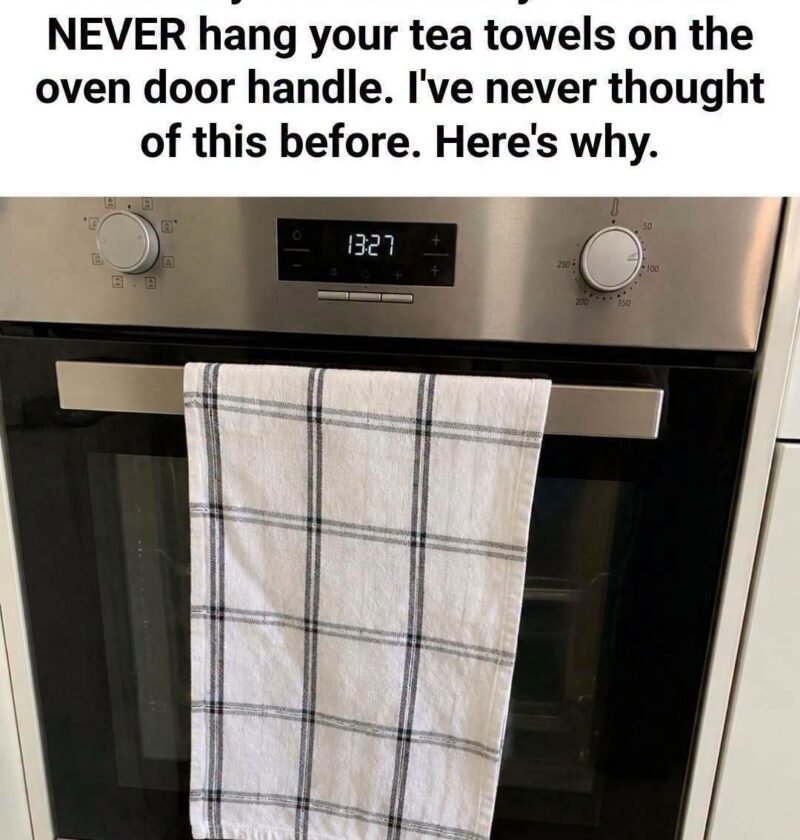
Hanging a dish towel or hand towel over the oven door handle is one of the most common habits in home kitchens. It is convenient, keeps the towel within arm’s reach, and makes the kitchen look tidy. However, food safety experts, home economists, and sanitation specialists frequently point out why this everyday habit is actually a major hygiene oversight.
Here is why keeping a towel on your oven door deserves a second look, along with the hidden risks and better alternatives:
1. The Bacterial Breeding Ground (Cross-Contamination)
-
What happens: Kitchen towels are constantly used to wipe down counters, dry freshly washed hands, handle warm pots, and occasionally mop up food spills. Every time you touch raw meat juices, unwashed vegetables, or kitchen surfaces and then wipe your hands on that towel, bacteria like E. coli, Salmonella, and Staphylococcus are transferred to the fabric.
-
Why it matters: Because oven doors are positioned right at waist height—and often near food prep zones—family members, children, and guests frequently brush up against the hanging towel, transferring those accumulated germs right back onto their clothes, hands, or cooking utensils.
2. Warmth and Moisture: The Perfect Microbe Incubator
-
What happens: When you bake, roast, or use the self-cleaning function, oven doors heat up significantly. Even during normal cooking, residual warmth radiates from the appliance.
-
Why it matters: Damp cloth + ambient warmth creates an ideal microclimate for bacteria and mold to multiply rapidly within the fibers of the fabric. Within a few hours in a warm kitchen, a slightly damp towel can harbor millions of microbial colonies.
3. The Fire Hazard Risk
-
What happens: While less common with modern electric ranges, gas stoves or ovens with front-facing burners, pilot lights, or venting systems can pose a genuine safety hazard.
-
Why it matters: If a long kitchen towel dangles too close to an active gas flame or an intense heating element, it can easily catch fire. Fire safety departments frequently cite forgotten dish towels near heat sources as an avoidable cause of kitchen flare-ups.
4. Trapping Grease and Kitchen Grime
-
What happens: Cooking releases microscopic droplets of oil, grease, and food particulate matter into the air, which gradually settle on kitchen surfaces.
-
Why it matters: A towel hanging exposed on an oven door acts like a sponge for airborne grease particles, making the fabric look dingy, feel sticky, and smell stale much faster than it would if stored properly.
Better Alternatives for Your Kitchen Towels
You don’t have to give up using kitchen towels, but changing where and how you keep them makes a huge difference:
-
Use a Wall-Mounted Hook or Bar: Hang your towels on a dedicated hook or pull-out bar mounted away from food prep areas and heat sources so air can circulate around them to dry quickly.
-
Wash and Change Frequently: Swap out kitchen hand towels daily—or immediately after handling raw meats—rather than leaving the same towel hanging for days.
-
Designate Separate Roles: Keep one towel strictly for drying clean dishes, and use paper towels or a separate, washable hand towel for wiping hands or cleaning up messy spills.