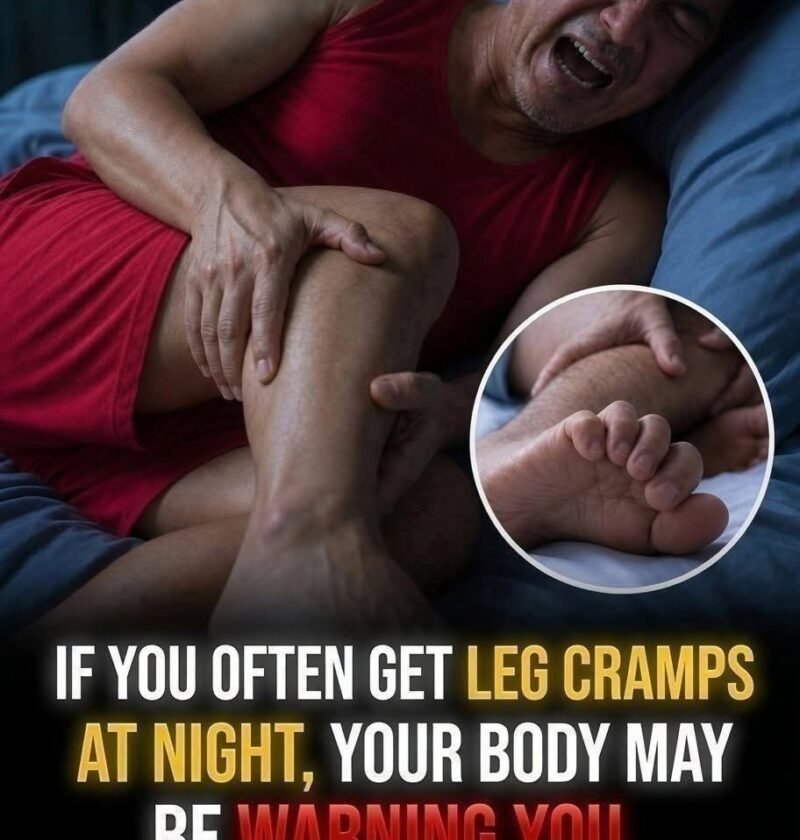
Viral health blogs and sensationalized wellness sites love to use dramatic, anxiety-inducing headlines like “If You Often Get Leg Cramps at Night, Your Body May Be Sending a Warning Sign” to suggest that a common, harmless muscle spasm is an immediate omen of a catastrophic medical emergency.
While waking up with your calf muscles suddenly locking into a painful knot is certainly miserable, the clinical reality behind nocturnal leg cramps is usually much more mundane—though it is worth understanding what separates everyday muscle fatigue from conditions that genuinely warrant a doctor’s attention.
What Actually Causes Nighttime Leg Cramps?
Nocturnal leg cramps (most commonly hitting the calf muscles or the arches of the feet) happen when a muscle involuntarily and forcibly contracts and fails to relax quickly. While researchers are still pinning down the exact trigger, medical science points to a few primary drivers:
-
Muscle Fatigue and Overuse:
-
The Reality: If you spent the day standing for hours on hard floors, engaged in unaccustomed exercise, or exerted your leg muscles intensely, the neuromuscular system becomes fatigued. As your muscles relax and lengthen while you fall asleep, the nervous system can misfire, triggering a sudden, painful spasm.
-
-
Dehydration and Electrolyte Shifts:
-
The Reality: Low levels of key electrolytes—specifically magnesium, potassium, and calcium, which govern muscle contraction and relaxation—can make muscle fibers hyper-excitable. Mild dehydration throughout the day further concentrates these imbalances.
-
-
Prolonged Positioning and Nerve Compression:
-
The Reality: Sitting or lying in a position that compresses nerves or restricts blood flow to the lower extremities for hours can set the stage for a sudden cramp when you shift positions in your sleep.
-
Where the “Warning Sign” Hyperbole Goes Wrong
Clickbait articles love to claim that nighttime cramps are a secret sign of advanced organ failure or severe systemic disease. While certain underlying medical issues can contribute to cramping (such as peripheral artery disease, chronic kidney disease, or certain electrolyte disorders), the vast majority of nighttime leg cramps are idiopathic—meaning they occur spontaneously in otherwise healthy people, especially as we age and muscle mass naturally shifts.
What Actually Helps Prevent and Relieve Cramps
Skip the panic-inducing medical theories. If you struggle with stubborn night cramps, these evidence-based habits offer real relief:
-
Immediate Relief (When a Cramp Hits):
-
Stretch the muscle: Straighten your leg and pull your toes upward toward your shin (dorsiflexion). It hurts initially, but it forces the antagonistic muscle to lengthen and break the spasm.
-
Apply Gentle Heat or Massage: Massaging the knotted muscle or stepping onto a cool floor briefly can help reset the muscle spindle reflexes.
-
-
Long-Term Prevention:
-
Stay Hydrated: Consistent water intake throughout the day keeps your circulatory and muscular systems functioning smoothly.
-
Gentle Stretching Before Bed: Doing simple calf and hamstring stretches right before you sleep reduces resting muscle tension.
-
Evaluate Your Footwear: Wearing unsupportive shoes or high heels all day places chronic strain on your lower leg and foot muscles, making them far more prone to cramping up at rest.
-
When to Actually Pay Attention (Red Flags)
While occasional nocturnal cramps are a normal, if annoying, part of human physiology, you should consult a doctor if your cramps are accompanied by:
-
Severe, progressive muscle weakness or visible muscle wasting in your legs.
-
Significant swelling, redness, or warmth in one leg (which can indicate a blood clot or deep vein thrombosis).
-
Pain that occurs consistently during daytime walking and disappears shortly after you rest (which can be a sign of arterial blockages or poor circulation).
Don’t let sensational headlines turn a normal muscle spasm into a midnight panic—stretching, hydration, and smart daytime habits are usually all you need to keep your legs quiet at night!