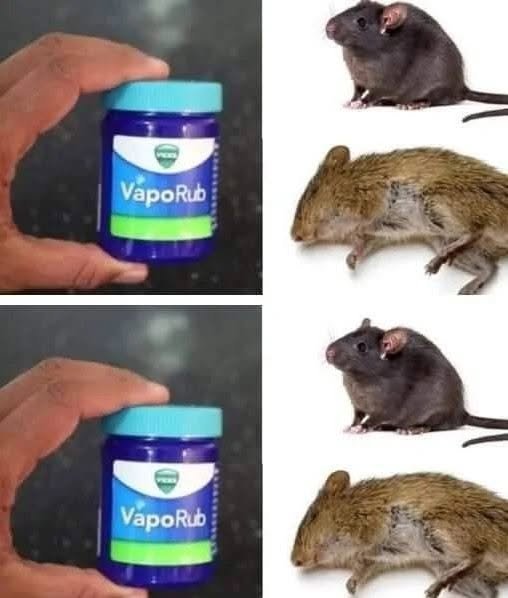
Viral pest-control videos and DIY lifestyle hacks love to feature dramatic headlines like “How to Get Rid of Rats Using Vicks VapoRub, a Method That Works!” promising that a jar of mentholated chest rub will clear out rodents overnight.
While it is true that mice and rats have an extremely sensitive sense of smell and strongly dislike the pungent, aromatic fumes of camphor, menthol, and eucalyptus, the reality of using Vicks VapoRub as a pest control solution is quite different from what viral videos claim.
Here is what Vicks actually does—and why it falls short as an actual rodent extermination method.
What Vicks VapoRub Can Do (Temporary Deterrent)
Vicks contains strong-smelling active ingredients like camphor, menthol, and eucalyptus oil.
-
Sensory Overload: When placed near a rat’s entry point or nesting area, the intense vapors temporarily irritate their sensitive olfactory senses.
-
Avoidance: Just as humans dislike walking into an overwhelmingly strong cloud of menthol, rodents will actively choose to avoid a freshly greased surface or a heavily scented cotton ball—for a little while.
Why Vicks VapoRub Is Not a Real Fix
While internet hacks frame aromatic ointments as a miracle repellent, relying on Vicks to solve a rat problem fails for a few major reasons:
-
Adaptation and Desensitization: Rats are remarkably resilient survivalists. The volatile organic compounds in Vicks evaporate relatively quickly, especially in open or well-ventilated areas. Once the scent fades even slightly, rats quickly become desensitized to the residual odor and will return right past it if food or shelter is on the other side.
-
Ignoring the Root Cause: A scent deterrent does nothing to stop the actual problem: sealing entry points. If mice or rats have found a warm, safe harbor inside your walls, garage, or attic, a strong smell will simply cause them to move to a different room or behind a different wall rather than leave your home entirely.
-
The Nesting Material Risk: Petroleum jelly (the base of Vicks) is a greasy, semi-solid substance. In some bizarre twists, rodents have actually been known to ignore minor irritants if they are desperate, or worse, incorporate scented household items into nesting debris.
What Actually Works to Keep Rats Out
If you want to permanently keep rodents out of your home, skip the chest rub and focus on physical exclusion and environmental control:
-
Seal All Entry Points (Exclusion):
-
Rats can squeeze through holes the size of a quarter (and mice through a dime). Use steel wool combined with caulk or expanding foam to block gaps around pipes, vents, door frames, and foundation cracks. (Rats can chew through regular plastic or foam, but they hate chewing steel wool).
-
-
Eliminate Food Sources:
-
Store all pantry goods in heavy glass, metal, or thick plastic containers. Do not leave pet food out overnight, and keep trash tightly sealed.
-
-
Remove Hiding Spots:
-
Clear away brush piles, tall grass, and wood stacked directly against the exterior walls of your home, as these make ideal nesting grounds right next to your foundation.
-
If you already have an established infestation inside your home, scented household hacks won’t cut it—you’ll need proper traps or professional pest control to safely resolve the issue!


