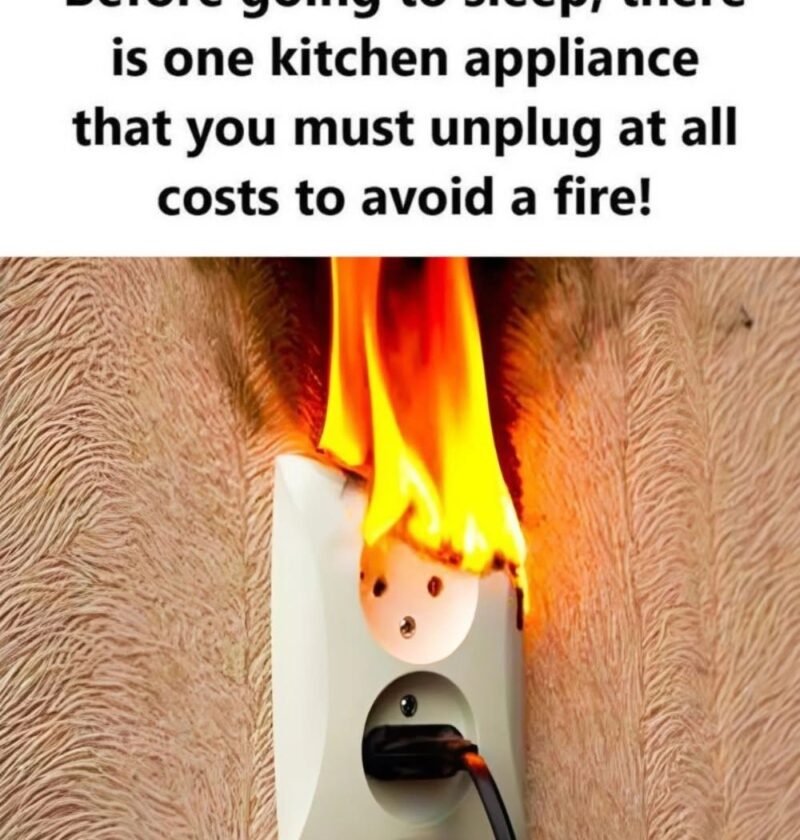
The headline “The Kitchen Appliance You Should Always Unplug at Night to Prevent House Fires” is a classic piece of fear-inducing clickbait, usually accompanied by an ominous photo of a toaster or a coffee maker. It plays on our deepest anxieties about home safety to trick us into clicking.
While electrical safety is paramount—especially in older homes—blanket mandates to unplug your kitchen appliances every single night are largely sensationalized internet myth-making.
Let’s separate common-sense electrical safety from viral kitchen panic.
The Reality Behind Kitchen Appliance Fires
Electrical fires in the kitchen do happen, but they are rarely caused by a well-functioning appliance simply sitting plugged into a modern, grounded wall outlet. Instead, they are usually driven by specific mechanical failures, damaged wiring, or user error.
Here is what safety experts actually look at when evaluating kitchen fire risks:
-
Toasters and Crumb Accumulation:
-
The Myth: Leaving your toaster plugged in invites a spontaneous electrical fire.
-
The Reality: Toasters can be a fire hazard, but not because of the plug. The danger comes from accumulated bread crumbs at the bottom of the unit catching fire if the heating elements stay engaged due to a stuck mechanical lever. Unplugging it helps, but the real preventative measure is simply cleaning out the crumb tray regularly.
-
-
Coffee Makers and Heating Elements:
-
The Myth: Leaving a coffee maker plugged in overnight will short circuit and burn the house down.
-
The Reality: Modern coffee makers and appliances feature automatic shut-off mechanisms and thermal fuses designed to prevent overheating. The actual hazard occurs if a heating unit is left switched on unattended, or if the internal wiring is frayed.
-
-
Faulty Wiring vs. the Outlet:
-
The vast majority of appliance-related electrical fires stem from faulty wall outlets, overloaded power strips, or frayed power cords—not the appliance itself resting in standby mode.
-
Common-Sense Kitchen Electrical Safety Rules
Instead of crawling under your counters every night to yank plugs out of the wall, you can protect your home much more effectively by following these expert-backed guidelines:
-
Inspect Your Cords Regularly: Check power cords for fraying, cracking, or exposed wires, especially on appliances that get moved around frequently (like blenders or mixers). Never use a damaged cord.
-
Never Use Extension Cords for High-Wattage Appliances: Appliances that draw heavy current—like air fryers, toaster ovens, microwaves, and coffee makers—should always be plugged directly into a wall outlet. Plugging them into extension cords or daisy-chained power strips is a leading cause of overheating and electrical fires.
-
Install Ground Fault Circuit Interrupter (GFCI) Outlets: Ensure all outlets near your kitchen counters are GFCI-protected. They instantly cut power if an electrical fault or moisture exposure is detected.
-
Unplug When Traveling: If you are leaving your home for a weekend getaway or an extended vacation, that is the ideal time to unplug small countertop appliances (like toasters, blenders, and coffee makers) as an extra layer of caution against power surges.