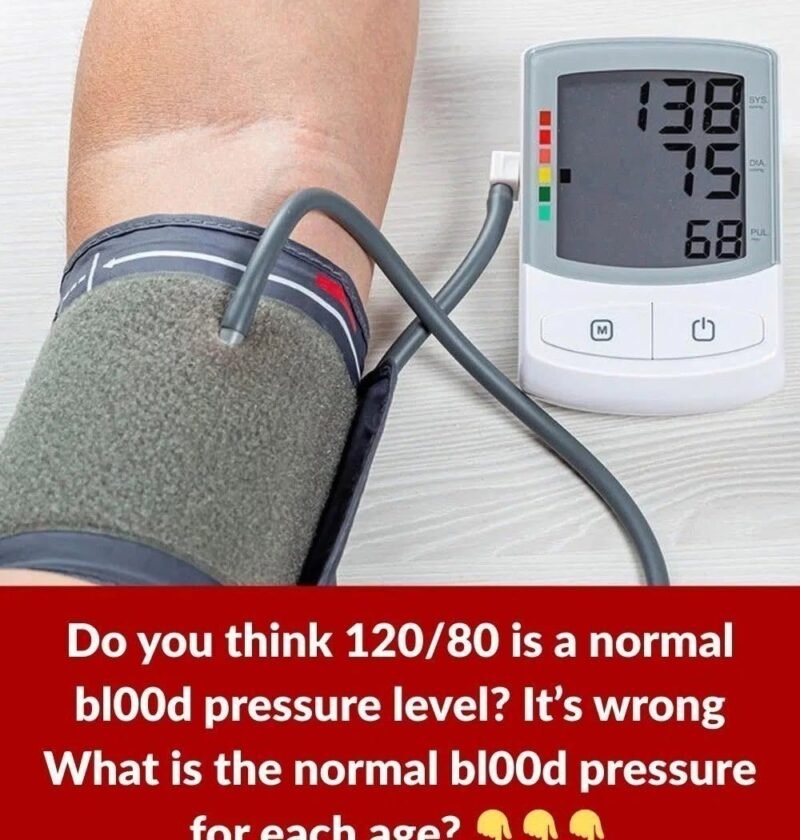
Unlike cholesterol or blood sugar—where standard healthy ranges shift as you get older—major medical guidelines (such as the American Heart Association and the American College of Cardiology) state that the clinical definition of ideal, normal blood pressure remains the same for all adults aged 18 and older.
While it is true that average or typical blood pressure tends to creep up as people age due to natural artery stiffening, “common” does not mean “healthy”.
Adult Blood Pressure Categories (Ages 18+)
For any adult, a standard reading is broken down into these categories:
| Category | Systolic (Top Number) | Diastolic (Bottom Number) | What it Means | |
| Normal | Less than 120 | and | Less than 80 | Ideal heart health; lowest cardiovascular risk. |
| Elevated | 120–129 | and | Less than 80 | A warning sign; tends to progress to high blood pressure without lifestyle tweaks. |
| Stage 1 Hypertension | 130–139 | or | 80–89 | High blood pressure. Doctors usually recommend lifestyle changes and evaluate overall heart risk. |
| Stage 2 Hypertension | 140 or higher | or | 90 or higher | High blood pressure requiring a combination of lifestyle changes and often medication. |
| Hypertensive Crisis | Higher than 180 | and/or | Higher than 120 | Medical Emergency: Wait 5 minutes and retest. If it remains this high—or if you have chest pain, shortness of breath, or confusion—seek emergency care immediately. |
(Note: If your top and bottom numbers fall into two different categories, the higher category dictates your classification. For example, 118/85 mmHg is considered Stage 1 Hypertension because of the diastolic reading.)
What About Children and Teens?
Blood pressure targets for children (ages 1 to 17) are completely different from adults because they are calculated based on age, height, and sex percentiles rather than a flat number. What is completely healthy for a 5-year-old would be considered dangerously low for a teenager. Pediatric checkups automatically plot these variables against standard growth charts.
Why Do People Think Blood Pressure Should Rise With Age?
If you look at population data, the average blood pressure for a healthy 20-year-old might hover around 115/75 mmHg, while an average 70-year-old might naturally float closer to 130–140/75 mmHg due to gradual wear-and-tear and stiffening in the arterial walls.
However, modern cardiology treats that age-related drift as a risk factor to manage rather than a new normal to accept. For older adults, doctors often individualize treatment targets (such as aiming for below 130/80 mmHg depending on overall health, other medications, and fall risks) to protect against strokes and heart attacks.
Are you looking at a specific home blood pressure reading you recently took, or trying to figure out what target range your doctor is aiming for?