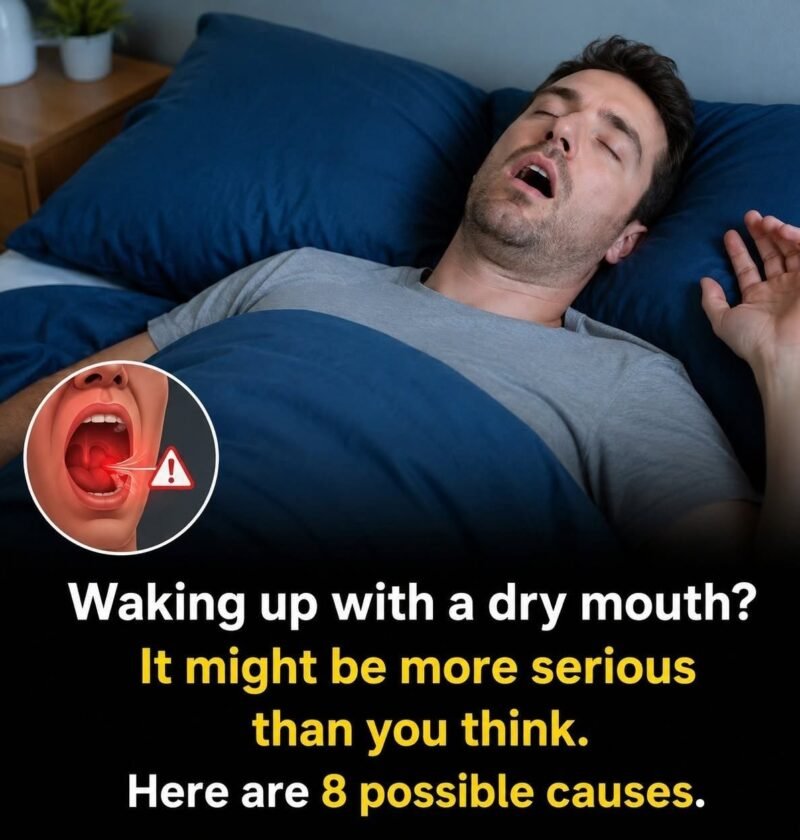
Experiencing dry mouth at night (clinically known as xerostomia) is far more than just an annoying morning annoyance. While sleeping with your mouth open or sleeping in a dry room can occasionally cause parched lips, persistent nighttime dry mouth often serves as an early warning sign that something deeper is affecting your salivary glands, fluid balance, or nervous system.
Saliva is vital: it protects tooth enamel, neutralizes acids, prevents bacterial overgrowth, and aids in swallowing. When your salivary flow plummets during sleep, your mouth loses its primary defense system.
Here are 8 warning signs and associated symptoms linked to nighttime dry mouth that you shouldn’t ignore:
1. Waking Up with a Sticky, Burning, or “Cotton” Sensation
-
What you notice: You wake up in the middle of the night or upon rising feeling as though your tongue is glued to the roof of your mouth, accompanied by a stinging or burning sensation on the tongue or inner cheeks.
-
Why it happens: Salivary gland output drops significantly during sleep under normal conditions, but when compounded by systemic dryness, mucosal tissues become irritated and inflamed from lack of lubrication.
2. Rapidly Progressing Dental Decay and Gum Sensitivity
-
What you notice: Developing new cavities seemingly overnight, tooth sensitivity to hot and cold, or gums that bleed easily and feel tender.
-
Why it happens: Without saliva to wash away food particles and neutralize plaque acids, teeth are left defenseless. Chronic dry mouth rapidly accelerates enamel erosion and periodontal disease.
3. Chronic Hoarseness and a Scratchy Throat Every Morning
-
What you notice: Waking up every day needing to clear your throat constantly, speaking with a raspy voice, or feeling a persistent tickle that feels like mild pharyngitis.
-
Why it happens: Chronic mouth-breathing at night dries out the delicate tissues of the pharynx and vocal cords, leaving them vulnerable to friction and irritation.
4. Difficulty Swallowing, Chewing, or Speaking First Thing
-
What you notice: Struggling to swallow your morning water without coughing, or feeling like your tongue is too heavy or dry to articulate words clearly upon waking.
-
Why it happens: Saliva acts as a natural lubricant. Severe dryness removes the slippery barrier required for the smooth movement of the tongue, palate, and pharyngeal muscles.
5. Altered Taste Buds or a Persistent Metallic Taste
-
What you notice: Food tasting bland, strange, overly salty, or leaving a bitter or metallic taste lingering in your mouth.
-
Why it happens: Your taste buds (gustatory receptors) rely on a moist chemical environment dissolved in saliva to properly perceive flavors. Dryness alters taste perception and chemical signaling.
6. Cracked, Split Corners of the Mouth (Angular Cheilitis)
-
What you notice: Painful, red, cracking splits or raw sores right at the corners of your lips that are slow to heal.
-
Why it happens: Saliva pooling or drying out at the oral commissures creates an ideal breeding ground for fungus (Candida) and bacteria, exacerbated by chronic lack of moisture.
7. Bad Breath (Halitosis) That Lingers Despite Brushing
-
What you notice: Waking up with intense, foul-smelling breath that persists even after thorough morning brushing and flossing.
-
Why it happens: Saliva contains natural antibacterial enzymes. When saliva flow drops, odor-causing bacteria multiply unchecked, releasing sulfur compounds in the dry oral cavity.
8. Frequent Nighttime Thirst Accompanied by Fatigue and Frequent Urination
-
What you notice: Waking up repeatedly gasping for water, feeling excessively thirsty throughout the night, and noticing changes in bathroom frequency or energy levels.
-
Why it happens: This triad (extreme thirst, dry mouth, and fatigue) is a classic systemic warning sign of undiagnosed or poorly controlled diabetes, where high blood sugar pulls fluid from tissues, dehydrating the body and salivary glands.
Common Underlying Culprits
If you experience persistent nighttime dry mouth, it is frequently linked to:
-
Medications: Over 500 common drugs—including antihistamines, blood pressure pills, antidepressants, and diuretics—list dry mouth as a primary side effect.
-
Mouth Breathing: Nasal congestion, a deviated septum, or sleep apnea can force you to breathe through your mouth all night.
-
Systemic Conditions: Autoimmune disorders like Sjögren’s syndrome (which specifically attacks moisture-producing glands), thyroid disorders, and diabetes.
What You Should Do
If nighttime dry mouth is an ongoing nightly occurrence rather than an occasional reaction to a stuffy nose, mention it to your dentist or primary care physician. Reviewing your current medications, checking your blood sugar, or evaluating for sleep apnea can pinpoint the root cause and protect your teeth and overall health.