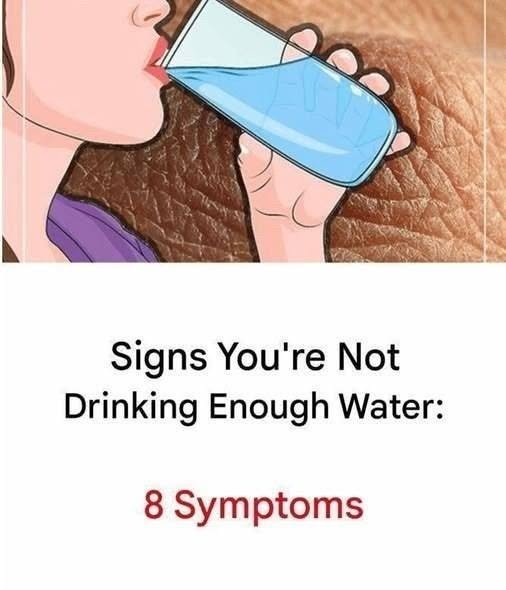
When your body does not get enough water, it enters a state of mild to severe dehydration, forcing your internal systems to work significantly harder to maintain basic functions. Because the human body is roughly 60% water, every single cell, tissue, and organ relies on adequate fluid balance to operate efficiently.
Here is a breakdown of what happens inside your body when hydration drops, progressing from early warning signs to critical physical strain.
1. The Immediate Physiological Adjustments
When fluid intake drops, your brain’s hypothalamus detects an increase in blood concentration (osmolarity) and triggers two immediate responses:
-
Thirst Signaling: It releases hormones to make you feel thirsty, urging you to drink.
-
Conserving Water: The pituitary gland releases antidiuretic hormone (ADH), signaling your kidneys to reabsorb as much water as possible. This is why your urine turns a deep, dark amber color—your body is desperately holding onto every drop of water it has left.
2. Physical and Cognitive Effects of Mild Dehydration
Even a mild fluid loss of just 1% to 2% of your body weight can noticeably impact how you feel and perform:
-
Brain Fog and Fatigue: Your brain tissue is highly sensitive to hydration. Dehydration shrinks brain cells slightly, leading to headaches, difficulty concentrating, slower reaction times, and persistent fatigue.
-
Dry Mouth and Mucous Membranes: Salivary glands shut down saliva production, and tissues in your nose, eyes, and throat dry out, making you more vulnerable to irritation and infection.
-
Sluggish Digestion and Constipation: Without enough fluid in the gastrointestinal tract, the colon pulls water out of passing stool to compensate, resulting in hard, dry stool and sluggish bowel movements.
-
Reduced Exercise Performance: Blood volume decreases, meaning your heart has to pump faster and harder to deliver oxygen-rich blood to your working muscles. You tire out much faster and may experience muscle cramps.
3. The Strain of Severe Dehydration
If fluid loss continues without replacement, the body moves past mild discomfort into dangerous territory:
-
Drop in Blood Pressure (Hypovolemic Shock): With less total fluid in your circulatory system, your blood pressure plummets. This can cause severe dizziness, fainting, or confusion upon standing.
-
Kidney Stress and Failure: Your kidneys need adequate fluid to filter waste products like urea and creatinine out of your blood. Severe dehydration can cause urine output to stop entirely, leading to a buildup of toxins and potential kidney damage or acute renal failure.
-
Overheating (Hyperthermia): Water is essential for thermoregulation. When you are dehydrated, your body stops sweating efficiently because it needs to conserve fluid. Without sweat to cool you down through evaporation, your core body temperature can rise rapidly, risking heat exhaustion or heatstroke.
How Much Water Do You Actually Need?
While the old rule of “8 glasses a day” is a helpful general baseline, individual hydration needs vary widely based on body size, activity level, climate, and diet. A more personalized rule of thumb is to monitor your urine color: pale yellow like lemonade indicates good hydration, while dark yellow or amber means it is time to drink a glass of water.