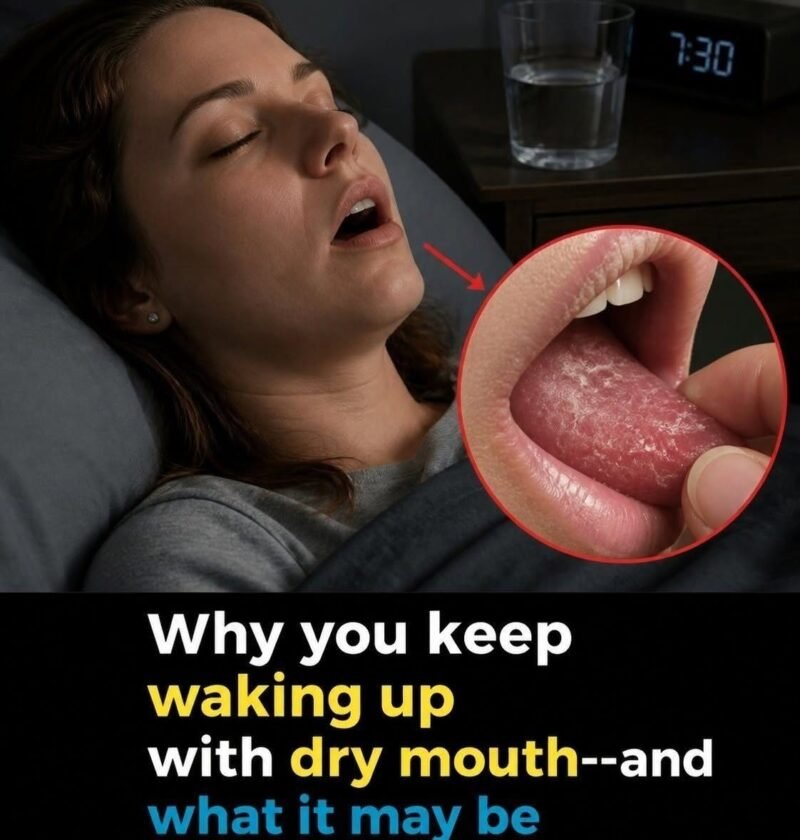
Waking up with a dry, sticky mouth—or a tongue that feels like sandpaper—is a surprisingly common complaint. While it’s normal for your body to naturally slow down saliva production while you sleep, waking up completely parched often points to specific environmental factors, habits, or physiological triggers.
Here is what your body might be trying to tell you, along with simple ways to find relief.
Common Culprits Behind Morning Dry Mouth
-
You are breathing through your mouth: This is the #1 cause of morning dryness. Whether due to a deviated septum, chronic allergies, a sinus infection, or simple habit, breathing with your mouth open all night rapidly evaporates whatever saliva your glands produce.
-
Undiagnosed sleep issues: Chronic mouth breathing and morning dryness can be tied to obstructive sleep apnea (OSA)—a condition where breathing repeatedly stops and starts during the night. If you also experience loud snoring, morning headaches, or daytime fatigue, it’s worth mentioning to a doctor.
-
Low-level nighttime dehydration: Going 7 to 8 hours without water can naturally dry you out, especially if you didn’t drink enough fluids throughout the previous day. Eating a heavy, salty, or spicy meal close to bedtime can also amplify this thirst.
-
Your evening habits (Alcohol, Caffeine, or Tobacco): Having a glass of wine or a late afternoon cup of coffee acts as a diuretic, pulling water from your body. Smoking or vaping irritates the oral tissues and dampens natural saliva flow.
-
Medication side effects: Hundreds of common medications—including antihistamines, decongestants, high blood pressure drugs, muscle relaxants, and anxiety or depression medications—list dry mouth as a side effect.
-
Dry bedroom air: Sleeping in a room with forced-air heating, air conditioning, or a low-humidity climate actively strips moisture from the air and your airways.
Simple Ways to Find Relief
If you want to wake up feeling more refreshed and protect your dental health (saliva is crucial for preventing cavities and gum disease), try these adjustments:
-
Set up a bedside humidifier: Running a cool-mist humidifier in your bedroom adds moisture back into the air, keeping your nasal passages and mouth from drying out overnight.
-
Keep water close by: Keep a glass of water on your nightstand so you can take a small sip if you wake up parched.
-
Review your evening routine: Try to limit alcohol and caffeine close to bedtime, and focus on consistent hydration throughout the day rather than chugging water right before sleep.
-
Clear your nasal passages: If congestion is forcing you to breathe through your mouth, try using a saline nasal spray or a nasal strip before bed to encourage nasal breathing.
-
Use alcohol-free oral care: Commercial mouthwashes containing alcohol can worsen dryness. Opt for alcohol-free rinses or toothpastes specifically formulated for dry mouth.
When to Seek Medical Advice
Occasional morning dryness is usually harmless and easy to fix with lifestyle changes. However, if your dry mouth is persistent, severe enough to wake you up repeatedly at night, makes it difficult to swallow or speak, or accompanies other symptoms like chronic fatigue or joint pain, it is a good idea to consult your primary care doctor, dentist, or an ear, nose, and throat (ENT) specialist to rule out underlying conditions.
Is morning dry mouth a new issue for you, or is it something you’ve been dealing with for a while?