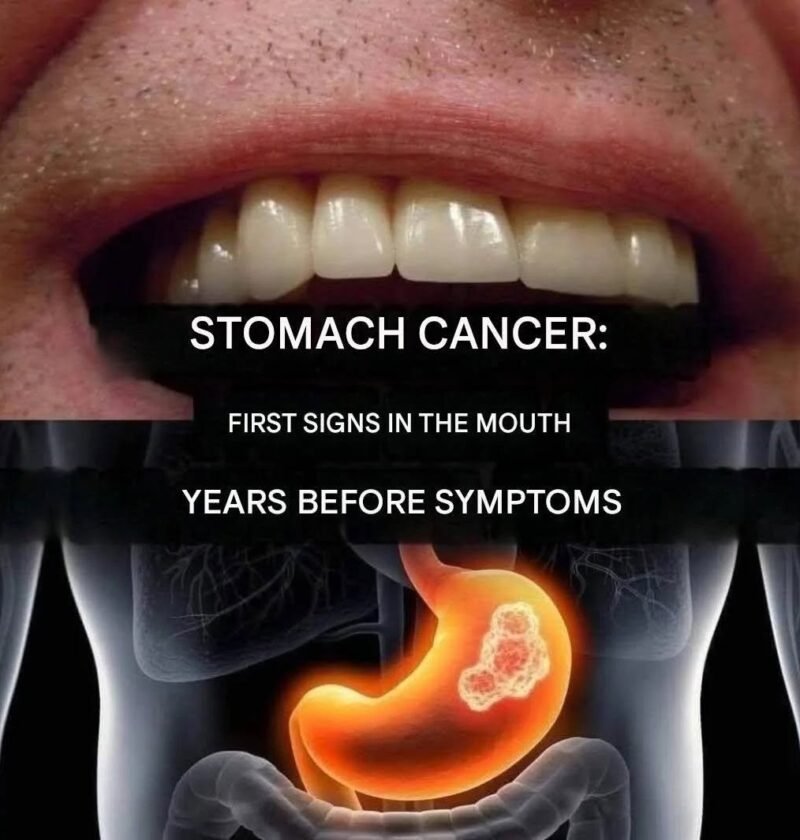
When people search for connections between stomach cancer and early signs in the mouth, they are usually looking at how upper gastrointestinal issues manifest upward, or exploring viral claims about oral markers appearing years before a diagnosis.
While stomach cancer itself does not typically cause specific “oral symptoms” years in advance, certain overlapping conditions, acid-related markers, and subtle upper digestive signals can appear in the mouth and throat long before a formal stomach cancer diagnosis.
What Can Actually Show Up in the Mouth and Throat
-
Chronic Acid Reflux and Heartburn (GERD):If a patient has long-term acid reflux—which can be a risk factor for or mimic changes in the upper GI tract—stomach acid frequently reaches the mouth. Over years, this can cause erosion of tooth enamel, chronic sore throats, a burning sensation on the tongue, or a sour taste.
-
Difficulty Swallowing (Dysphagia):If a tumor develops in the very upper part of the stomach (the gastroesophageal junction) or lower esophagus, it can create a physical sensation that food is getting stuck in the throat or lower chest area. Patients might consciously or unconsciously change how they chew or swallow long before realizing there is an issue in the stomach.
-
Subtle Nutritional Deficiencies (Pale Mucosa):Slow, microscopic bleeding from the stomach lining can cause chronic iron-deficiency anemia over a long period. This can sometimes present in the mouth as pale gums, a smooth or sore tongue (glossitis), or cracks at the corners of the mouth (angular cheilitis).
Real Early Signs of Stomach Cancer to Watch For
In its earliest stages, stomach cancer is notoriously subtle and often mimics common, benign conditions like gastritis, ulcers, or routine indigestion. True warning signs that warrant a medical evaluation include:
-
Persistent Indigestion or Heartburn that doesn’t resolve with standard over-the-counter treatments.
-
A Feeling of Fullness quickly after starting a meal, even when eating a small portion.
-
Unexplained Weight Loss and a sudden loss of appetite.
-
Vague Upper Abdominal Discomfort or mild nausea.
-
Dark or Black Stools, which can indicate bleeding further up in the digestive tract.
If you or someone you know is experiencing persistent, unusual digestive changes that won’t go away, the safest and most effective step is to consult a primary care physician or a gastroenterologist for a proper evaluation.