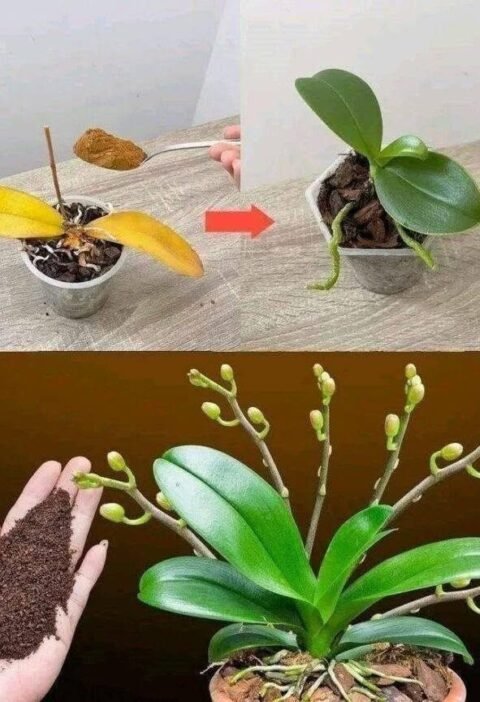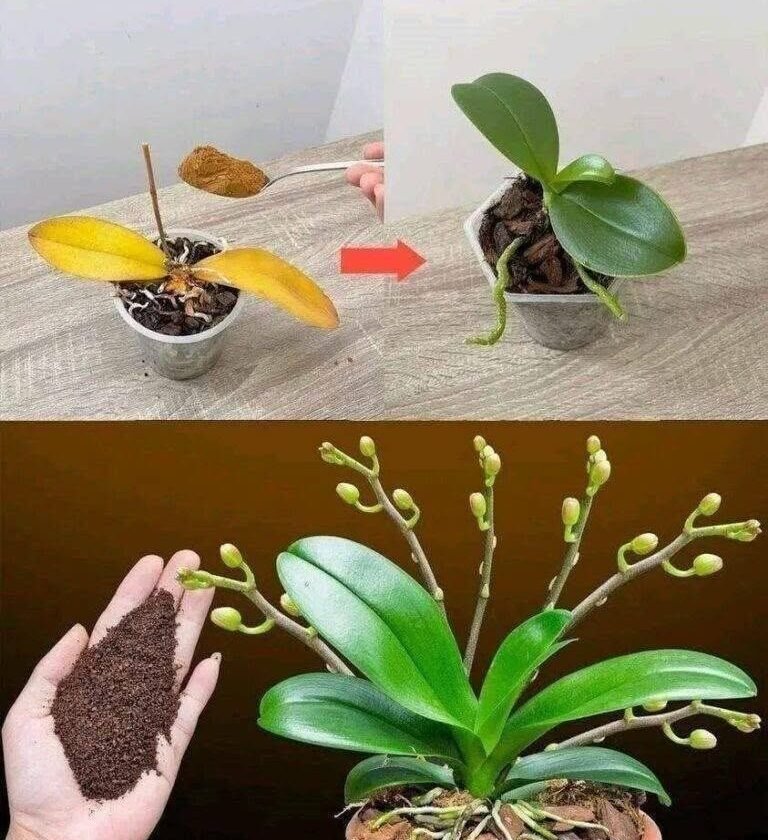
If you’re referring to the viral “one teaspoon and your orchid will suddenly explode with flowers” gardening claim, be skeptical. There isn’t a magic teaspoon ingredient that guarantees abundant orchid blooms overnight.
A better approach is to give orchids the conditions they actually need:
- Bright, indirect light: Insufficient light is one of the most common reasons orchids fail to flower.
- Proper watering: Water thoroughly when the growing medium has partly dried, then let excess water drain completely. Don’t leave the roots sitting in stagnant water.
- Orchid fertilizer: During active growth, use a balanced orchid fertilizer according to the product’s instructions rather than dramatically increasing the dose.
- Good drainage and airflow: Orchids generally do better in a well-aerated orchid medium rather than ordinary garden soil.
- Temperature changes: For many common Phalaenopsis orchids, a modest difference between daytime and nighttime temperatures can help encourage flowering.
- Patience: Even a healthy orchid may take weeks or months to produce a new flower spike.
Avoid dumping sugar, baking soda, vinegar, undiluted fertilizer, or other homemade mixtures into the pot. They can damage roots or alter the growing medium without providing a reliable flowering benefit.
Bottom line: If an orchid isn’t blooming, the most useful “secret ingredient” is usually enough light + correct watering + appropriate nutrition + patience, not a miracle teaspoon. 🌸