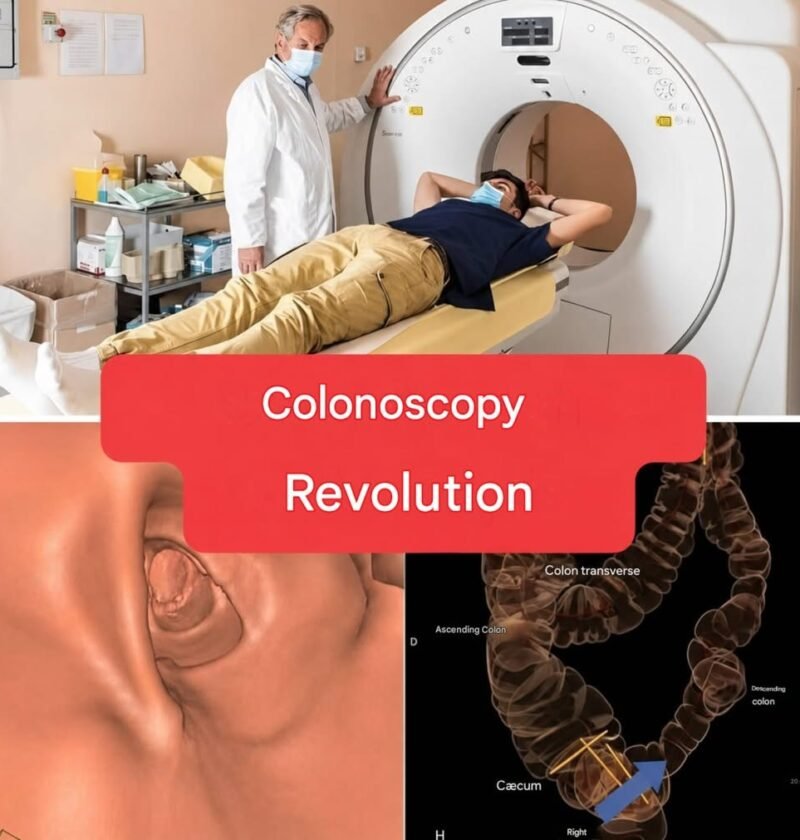
Headlines claiming that a “new method” has completely eliminated the need for invasive colonoscopies are often oversimplified clickbait. While medical technology has advanced to offer alternative screening options, a completely non-invasive test that matches the diagnostic and therapeutic power of a traditional colonoscopy does not yet exist.
However, there are established alternative methods that reduce invasiveness for routine screening purposes.
What Are the Alternatives to Traditional Colonoscopy?
-
Stool-Based Tests (e.g., Cologuard, FIT):
-
How it works: You collect a stool sample at home and mail it in to check for hidden blood or altered DNA biomarkers associated with cancer.
-
The catch: It is entirely non-invasive, but it is a screening tool, not a diagnostic one. If the test comes back positive, you still have to undergo a standard, invasive colonoscopy to find and remove any polyps.
-
-
CT Colonography (Virtual Colonoscopy):
-
How it works: Uses specialized X-ray equipment and CT scans to produce 2D and 3D images of the large intestine.
-
The catch: While it avoids inserting a long scope with a camera, it still requires the exact same unpleasant bowel preparation, and a small tube must still be inserted into the rectum to inflate the colon with air. Furthermore, if a polyp or abnormality is detected, you must follow up with a traditional colonoscopy anyway to remove it.
-
Why Traditional Colonoscopy Remains the Gold Standard: A standard colonoscopy isn’t just for viewing the lining of the colon; it allows a gastroenterologist to immediately remove pre-cancerous polyps or take tissue biopsies during the same procedure. Non-invasive tests can detect potential issues, but they cannot treat them on the spot.