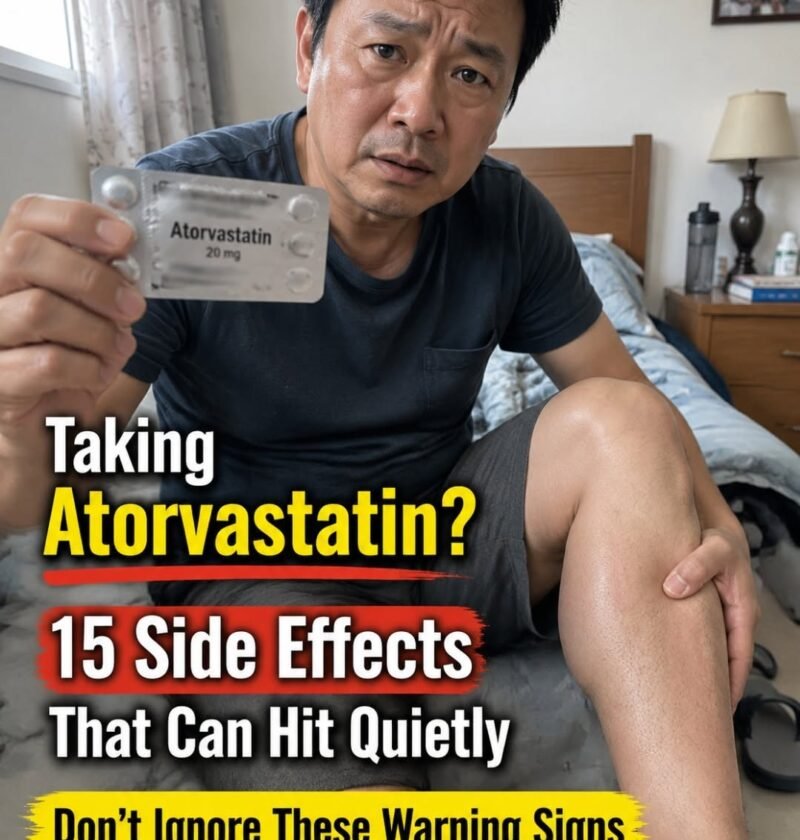
Yes, atorvastatin can cause side effects, but a headline claiming there are “15 subtle side effects” can make the risks sound more common or certain than they are. Atorvastatin is widely used to lower cholesterol and reduce the risk of heart attack and stroke. nhs.uk+1
Possible side effects
Some people may experience:
- Muscle aches or pain
- Muscle cramps
- Muscle weakness
- Joint or extremity pain
- Headache
- Dizziness
- Nausea
- Indigestion
- Constipation
- Diarrhea
- Gas or abdominal discomfort
- Sleep problems
- Tiredness or feeling weaker
- Changes in liver enzymes
- A small increase in blood glucose or HbA1c
Not everyone experiences these effects, and many symptoms are not necessarily caused by atorvastatin. nhs.uk+1
The symptoms that matter most
Unexplained muscle pain, tenderness, or weakness, particularly if severe or accompanied by fever or dark/red-brown urine, should be reported promptly because very rarely statins can cause serious muscle injury (rhabdomyolysis)., antiviral medicines, other cholesterol drugs, and grapefruit can increase the risk of atorvastatin-related adverse effects. FDA Access Data
Also seek medical advice for signs of possible liver injury, such as yellow skin or eyes, dark urine, unusual tiredness, or significant abdominal symptoms. FDA Access Data
Don’t stop it on your own
If you suspect atorvastatin is causing symptoms, speak with your doctor or pharmacist. They may investigate other causes, adjust the dose, or consider a different cholesterol-lowering medicine. Don’t simply stop the drug, because cholesterol can rise again and you may lose its cardiovascular protection. nhs.uk+1
One other consideration is drug interactions. Certain antibiotics, antifungals, antiviral medicines, other cholesterol drugs, and grapefruit can increase the risk of atorvastatin-related adverse effects. nhs.uk+1