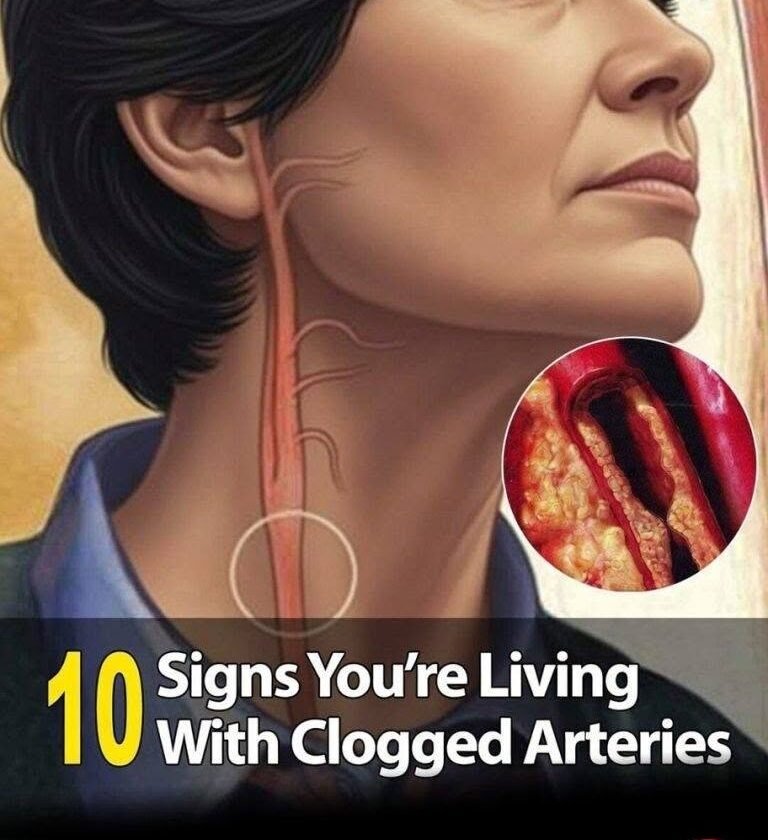
If you mean 10 warning signs that can sometimes indicate narrowed or blocked arteries, here’s a medically useful version. Importantly, blocked arteries can cause no symptoms at all, so symptoms alone cannot diagnose them.
10 indicators you shouldn’t ignore
- Chest pressure, squeezing, or pain — especially with walking, climbing stairs, or exertion; this can indicate reduced blood flow to the heart.
- Shortness of breath — particularly during activity or accompanied by chest discomfort.
- Pain or heaviness in the jaw, neck, back, shoulder, or arm — especially if it occurs with exertion.
- Unusual sweating, nausea, or light-headedness — particularly together with chest discomfort.
- Leg pain or cramping when walking that improves with rest — a classic possible sign of peripheral artery disease (PAD).
- Coldness in one foot or leg, especially if one side is noticeably colder than the other.
- Numbness or weakness in a leg or foot — particularly when associated with poor circulation.
- Slow-healing wounds on the feet or legs — especially in people with diabetes or known vascular disease.
- A weak or difficult-to-feel pulse in the feet — this can occur with reduced arterial blood flow.
- Sudden neurological symptoms such as facial drooping, difficulty speaking, sudden vision loss, or weakness/numbness on one side — these can indicate a stroke or TIA and require emergency attention.
🚨 Don’t wait with these symptoms
If someone has new or severe chest pressure/pain, severe shortness of breath, fainting, or symptoms of a stroke, seek emergency medical care immediately. Don’t assume it’s simply indigestion, aging, or “poor circulation.”
And one important point: there is no reliable home symptom checklist that can tell you whether an artery is blocked. Doctors may need an examination, blood tests, ECG, ultrasound/Doppler, or other imaging depending on the symptoms.
If you’d like, I can also give you “10 early signs of clogged heart arteries specifically in people over 60” and explain which ones are most important.