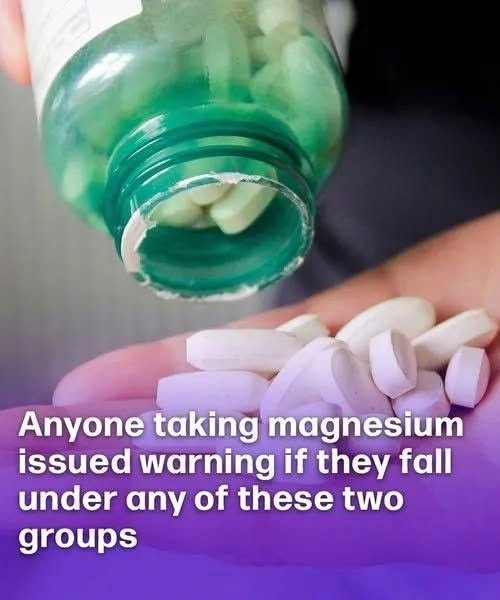
⚠️ Magnesium Supplements: Who Should Be Especially Careful?
Magnesium is an essential mineral, but more isn’t always better. For most healthy adults, magnesium from food is safe. The greater concern is taking high-dose supplements or magnesium-containing medicines without considering kidney function and medication interactions. Office of Dietary Supplements+1
1. People with kidney disease
This is the most important high-risk group. Healthy kidneys remove excess magnesium, but impaired kidney function can allow magnesium to build up in the blood. Very high levels can cause weakness, low blood pressure, breathing problems, abnormal heart rhythms, and other serious effects. Office of Dietary Supplements
If you have kidney disease, reduced kidney function, or are receiving dialysis, don’t start a magnesium supplement without medical advice.
2. People taking certain medications
Magnesium can interfere with absorption of some medicines, including certain antibiotics and oral bisphosphonates. It can also interact with other medications depending on the specific drug and dose. Office of Dietary Supplements
Examples include:
- Tetracycline antibiotics
- Quinolone antibiotics
- Oral osteoporosis medicines such as alendronate
- Some medications where kidney function or mineral levels need careful monitoring
Often the solution is separating the doses by several hours, rather than completely avoiding magnesium—but the correct timing depends on the medication.
Other people who should be cautious
People with significant medical a supplement is harmless simply because it’s a mineral. If you have kidney problems or take prescription medication, check with a healthcare professional before starting one. conditions, those taking multiple medications, and anyone considering high-dose magnesium should check with a doctor or pharmacist first.
Too much supplemental magnesium commonly causes diarrhea, nausea, and abdominal cramping. Extremely high intakes can be dangerous. Office of Dietary Supplements
🥬 Food vs. supplements
There’s an important distinction: magnesium naturally found in foods such as nuts, seeds, beans, whole grains, and leafy green vegetables is generally not the same concern as taking large doses of supplemental magnesium.
Bottom line: Don’t treat magnesium as automatically dangerous, but don’t assume that a supplement is harmless simply because it’s a mineral. If you have kidney problems or take prescription medication, check with a healthcare professional before starting one.