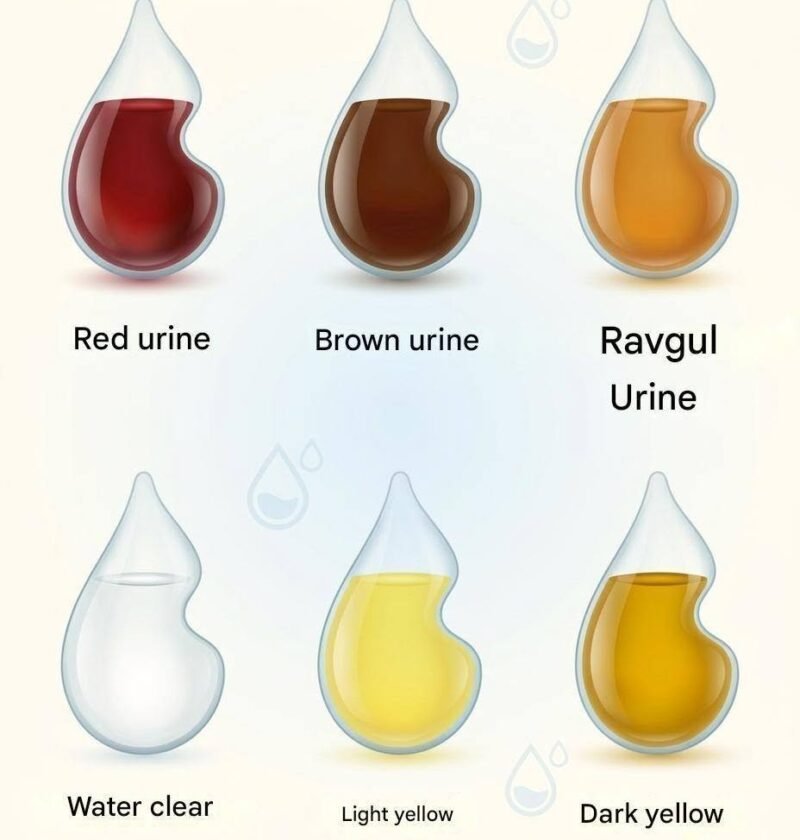
What Does the Color of Your Urine Say About Your Health? 💧
Urine color can offer clues, but it can’t diagnose a medical condition by itself. Hydration, foods, vitamins, medications, and some illnesses can all change its appearance.
🌈 Common urine colors
- 🟨 Pale yellow: Usually a sign of adequate hydration.
- 💛 Dark yellow/amber: Often means your urine is concentrated and you may need more fluids.
- 🟤 Brown or cola-colored: Can occur with severe dehydration, certain medications, liver problems, or muscle injury.Persistent brown urine should be medically evaluated.
- 🩷 Pink or red: May indicate blood, although beets and some medicines can also cause red or pink urine. Blood in urine should be checked by a healthcare professional.
- 🟠 Orange: Can result from dehydration or certain medications; sometimes it can be associated with liver or bile-duct problems.
- 🟢 Green or 🔵 blue: Uncommon, but certain medications, dyes, or infections can cause these colors.
- ☁️ Cloudy: May occur with dehydration or crystals, but can also accompany a urinary infection.
💊 What about bright yellow urine?
If you’ve recently taken a B-complex vitamin or multivitamin, bright fluorescent yellow urine is usually harmless. Excess water-soluble vitamin B2 (riboflavin) is excreted in urine and can produce this striking color.
🚨 When to get checked
Don’t ignore persistent blood-colored, brown, or very dark urine, especially if you also have pain, fever, yellowing of the skin/eyes, reduced urination, or feel unwell.
And remember: clear urine all day isn’t necessarily better. Constantly drinking excessive amounts of water can also be harmful. Aim for normal hydration rather than trying to keep your urine completely clear.