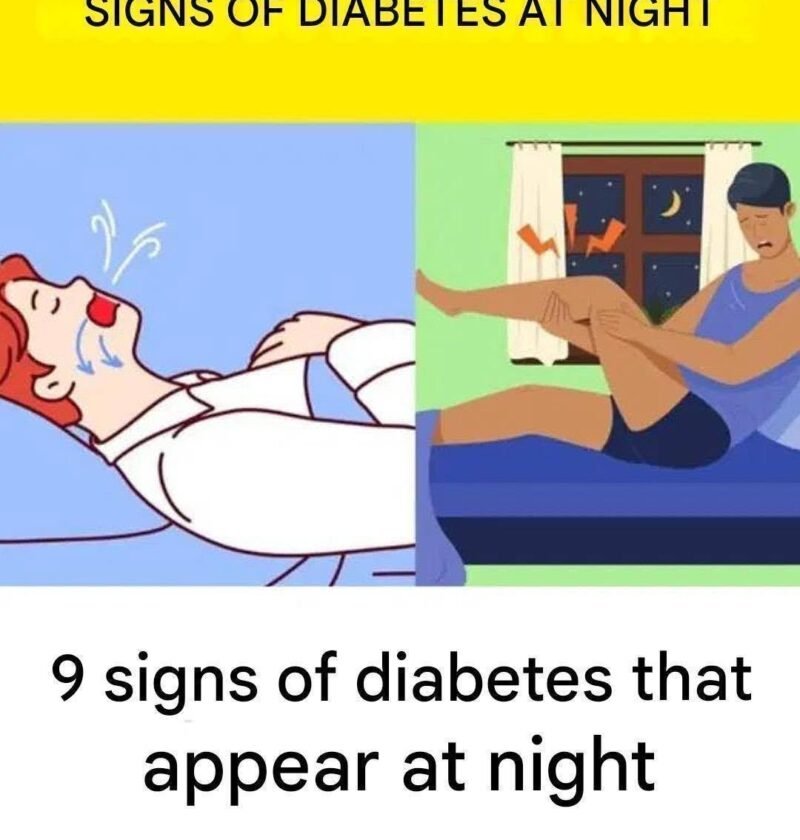
Headlines warning about “9 Signs of Diabetes That Appear at Night” are classic clickbait that take normal nighttime habits or generalized fatigue and rebrand them as secret nocturnal symptoms of high blood sugar.
While unmanaged diabetes can disrupt sleep and trigger nighttime symptoms due to fluctuating blood glucose levels, the body doesn’t follow a separate set of rules just because the sun goes down. Instead, nighttime symptoms are simply the downstream effects of metabolic imbalance happening 24/7.
Here is a look at what is actually happening physiologically when diabetes disrupts your nights, versus the exaggerated myths online.
Genuine Nighttime Signs of Unmanaged Blood Sugar
When blood glucose levels remain chronically high (hyperglycemia) or drop too low (hypoglycemia), it can directly impact your sleep and bodily functions overnight:
-
Frequent Nighttime Urination (Nocturia):
-
The Mechanism: When there is excess sugar in your bloodstream, your kidneys work overtime to filter and absorb it. When they can’t keep up, the extra glucose spills into your urine, dragging fluids along with it (an osmotic effect). This leads to a higher volume of urine, forcing you to wake up multiple times during the night to use the restroom.
-
-
Extreme Nighttime Thirst (Polydipsia):
-
The Mechanism: Because your body is losing extra fluids through frequent urination overnight, your brain triggers intense thirst signals, causing you to wake up with a dry mouth or a desperate need to gulp water in the middle of the night.
-
-
Night Sweats and Blood Sugar Drops (Nocturnal Hypoglycemia):
-
The Mechanism: This is particularly common in individuals taking insulin or certain oral diabetes medications. If blood sugar drops too low overnight, the body releases emergency stress hormones like adrenaline and cortisol to push glucose back up. This surge can trigger sudden night sweats, tremors, waking up with a rapid heartbeat, or intense morning headaches.
-
-
Numbness, Tingling, or Burning Feet (Neuropathy):
-
The Mechanism: Long-term high blood sugar can damage peripheral nerves, particularly in the feet and lower legs. While nerve damage is present all day, it often feels more noticeable or intensely painful at night because there are fewer daytime distractions, and warmth under heavy blankets can aggravate neuropathic tingling or burning sensations.
-
What Clickbait Lists Usually Exaggerate
Viral articles love to pad their lists to reach dramatic numbers like “9 signs” by including vague, everyday sleep issues that have nothing uniquely to do with diabetes:
-
General insomnia or trouble falling asleep: While blood sugar spikes or drops can disturb sleep architecture, tossing and turning is far more commonly caused by stress, sleep apnea, screen time, or aging.
-
Mild daytime fatigue mentioned as a “night” sign: Articles will claim that feeling tired the next day means your sleep was ruined by nocturnal diabetes, ignoring standard sleep hygiene.
-
Random skin itching at night: While severe dry skin or yeast infections can happen with diabetes, ordinary night itching is usually just dry winter skin or laundry detergent irritation.
How Diabetes is Actually Diagnosed
Waiting to spot quirky nighttime signs is not a reliable way to catch or manage diabetes. Because early prediabetes and type 2 diabetes often develop with zero noticeable symptoms, clinical diagnosis relies on straightforward blood tests ordered by a doctor:
-
A1C Test: Measures your average blood sugar over the past 2 to 3 months.
-
Fasting Plasma Glucose (FPG) Test: Checks your blood sugar after going without food for at least 8 hours.
Are you or a loved one looking into blood sugar health because of symptoms like frequent nighttime bathroom trips, or exploring general wellness tracking?