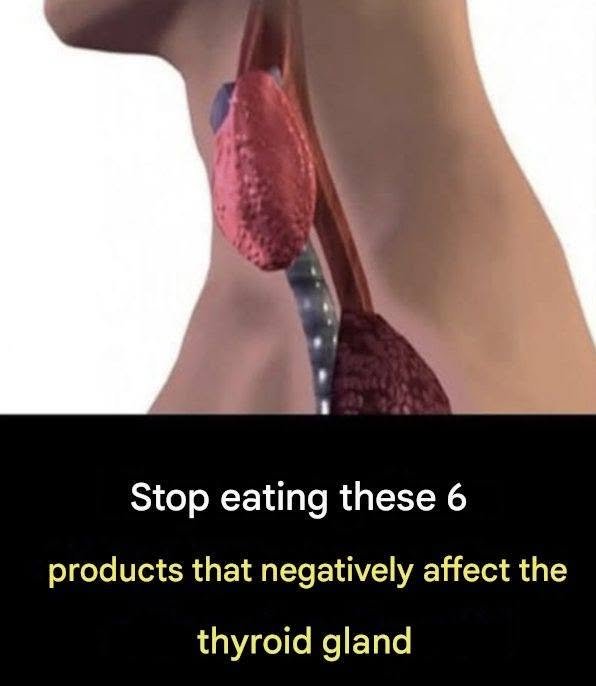
6 Foods That Can Affect Thyroid Health — What to Limit
The headline “foods that negatively affect your thyroid” is somewhat misleading. Most people with a healthy thyroid do not need to eliminate specific foods. Problems are more likely when someone has an existing thyroid condition, takes thyroid medication, or consumes very large amounts of certain foods or nutrients.
1. Soy foods
Soy contains compounds that can interfere with thyroid hormone absorption when eaten around the same time as levothyroxine. You generally don’t need to eliminate tofu, soy milk, or other soy foods; instead, separate them from your medication as advised by your clinician.
2. Cruciferous vegetables 🥦
Broccoli, cabbage, cauliflower, kale, and similar vegetables contain goitrogenic compounds. Normal portions are generally safe, particularly when cooked. Extremely large amounts of raw cruciferous vegetables may be more relevant in people with iodine deficiency.
3. Highly processed foods
Ultra-processed foods aren’t specifically toxic to the thyroid, but diets high in them can contribute to weight gain and poorer overall cardiometabolic health. A varied, minimally processed diet is preferable.
4. Very high-fiber meals
Fiber is healthy, but large amounts can reduce absorption of levothyroxine. If you take thyroid medication, consistency in timing and diet is important.
5. Foods or supplements containing excessive iodine
Iodine is essential have raised questions about very high consumption of millet in iodine-deficient populations, but ordinary dietary amounts aren’t for thyroid hormone production, but more isn’t better. Excessive iodine from supplements or certain concentrated products can trigger or worsen thyroid dysfunction in susceptible people.
6. Millet and certain concentrated “thyroid remedies”
Some studies have raised questions about very high consumption of millet in iodine-deficient populations, but ordinary dietary amounts aren’t a reason for most people to avoid it. Be particularly skeptical of supplements marketed as “thyroid cleanses” or “thyroid boosters.”
If you take levothyroxine
Take it consistently, usually on an empty stomach, and ask your pharmacist or doctor how long to wait before eating. Calcium and iron supplements can significantly interfere with absorption and generally need to be separated from levothyroxine.
Bottom line: For thyroid health, adequate—but not excessive—iodine, a balanced diet, and correct medication use are much more important than eliminating broccoli, cabbage, or soy.
If you tell me whether you have hypothyroidism, hyperthyroidism, Hashimoto’s, or take levothyroxine, I can give you a more specific food-and-medication guide.