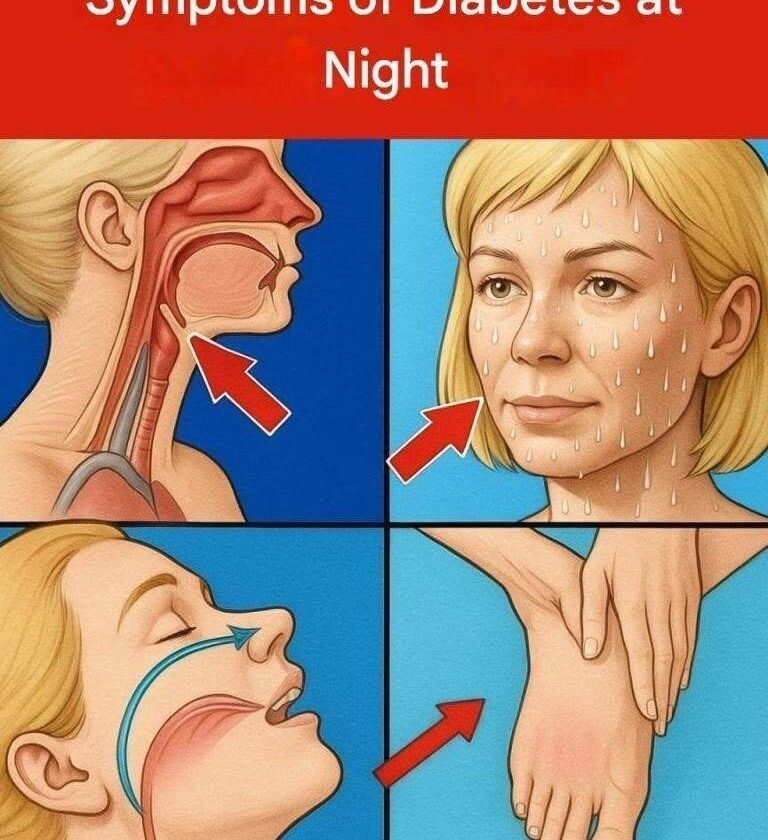
5 Diabetes Symptoms That Can Appear at Night
Diabetes doesn’t have a specific set of symptoms that occurs only at night, but some signs can become more noticeable while you’re sleeping.
-
🚽 Frequent nighttime urination
High blood glucose can cause the kidneys to excrete more glucose and water, increasing urination and potentially waking you repeatedly. -
🥤 Excessive thirst or dry mouth
Losing more fluid through urine can leave you thirsty, including during the night. -
💦 Night sweats
In someone taking insulin or certain diabetes medications, sweating during sleep can be a sign of low blood glucose (hypoglycemia). Night sweats have many other possible causes, too. -
😴 Poor sleep or unusual nighttime restlessness
Blood-glucose fluctuations, frequent urination, thirst, or hypoglycemia can interfere with sleep. -
🦵 Burning, tingling, or numb feet
Long-standing high blood glucose can damage peripheral nerves, causing symptoms that may be particularly noticeable at night.
One important point
These symptoms don’t diagnose diabetes. Frequent urination, thirst, sweating, and poor sleep can have many causes.
If you’re experiencing several of them, particularly persistent thirst and frequent urination, ask a healthcare professional about blood-glucose testing such as an A1C or fasting glucose test.
🚨 If someone with diabetes develops confusion, severe weakness, seizures, or loss of consciousness, treat it as an emergency. If low blood sugar is suspected and the person is awake and able to swallow, follow their prescribed hypoglycemia plan and seek medical advice if symptoms don’t resolve.
Bottom line: Nighttime symptoms can sometimes provide a clue, but a blood test—not symptoms alone—is what determines whether you have diabetes.