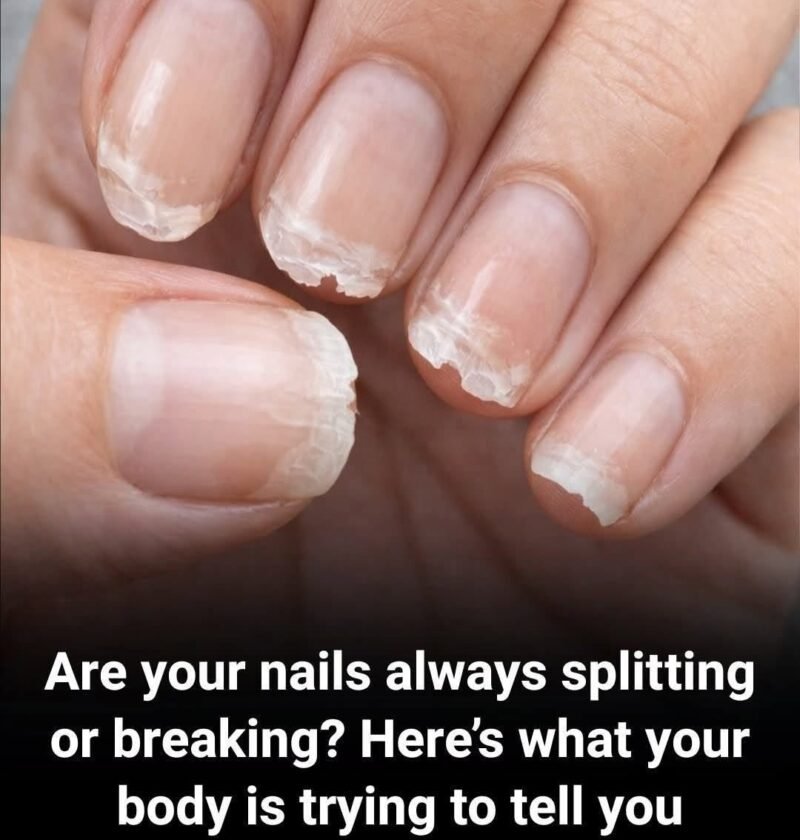
Brittle, peeling, or weak nails are more than just a cosmetic frustration—they are often your body’s way of sending you a subtle health signal. While everyday wear and tear can play a role, persistent changes in your nail strength usually point to nutritional or environmental factors.
1. Common Nutritional Deficiencies
Your nails are made of a tough protein called keratin, and building them requires a steady supply of vitamins and minerals. A lack of specific nutrients can directly weaken them:
-
Iron Deficiency (Anemia): Low iron levels can lead to thin, brittle nails or even a concave, spoon-shaped appearance known as koilonychia.
-
B-Vitamins (Biotin): Biotin (Vitamin B7) is famous for supporting cell growth and protein synthesis. A shortage often results in weak, splitting, or slow-growing nails.
-
Zinc: Essential for cell division and tissue growth, zinc deficiency can cause white spots, slow growth, and brittle textures.
-
Protein: Since nails are protein-based, an overall lack of dietary protein can leave them fragile and prone to breaking.
2. Environmental and Lifestyle Triggers
Sometimes the culprit isn’t what you are putting into your body, but what your hands are exposed to on the outside:
-
Frequent Water Exposure: Constantly washing your hands, swimming, or doing dishes without gloves causes nails to absorb water and then dry out repeatedly. This cycle strips away natural oils, leading to peeling and brittleness.
-
Harsh Chemicals: Frequent use of acetone-based nail polish removers, harsh household cleaning agents, and low-quality nail polishes can severely dehydrate the nail plate.
-
Gel Manicures and Acrylics: The aggressive filing required to prep nails, combined with the chemical removal processes of artificial enhancements, can leave your natural nails paper-thin and fragile.
-
Aging: Just like skin and hair, nails naturally change as we age, becoming drier and more prone to splitting due to slower cell turnover and decreased moisture retention.
3. Simple Ways to Strengthen Your Nails
You can help restore resilience to your nails by adopting a few protective and nourishing habits:
-
Boost Your Nutrient Intake: Focus on a balanced diet rich in lean proteins, leafy greens, nuts, seeds, eggs, and whole grains. If you suspect a deficiency, consult a doctor before starting supplements like biotin or iron.
-
Protect Your Hands: Wear rubber gloves when doing dishes or cleaning with harsh chemicals.
-
Keep Them Moisturized: Regularly apply a thick hand cream or cuticle oil containing ingredients like vitamin E, shea butter, or jojoba oil, especially right after washing your hands.
-
File Gently: Use a fine-grit glass or crystal nail file, and file in one direction rather than sawing back and forth, which can fray the nail edges and cause splitting.
Note: If your nail weakness is accompanied by unusual discoloration, pitting, detachment from the nail bed, or swelling in the surrounding skin, it is best to consult a dermatologist, as these can be signs of underlying medical conditions like a fungal infection or thyroid issues.
Have you noticed your nails becoming brittle recently, or are you looking to fix a long-term issue?