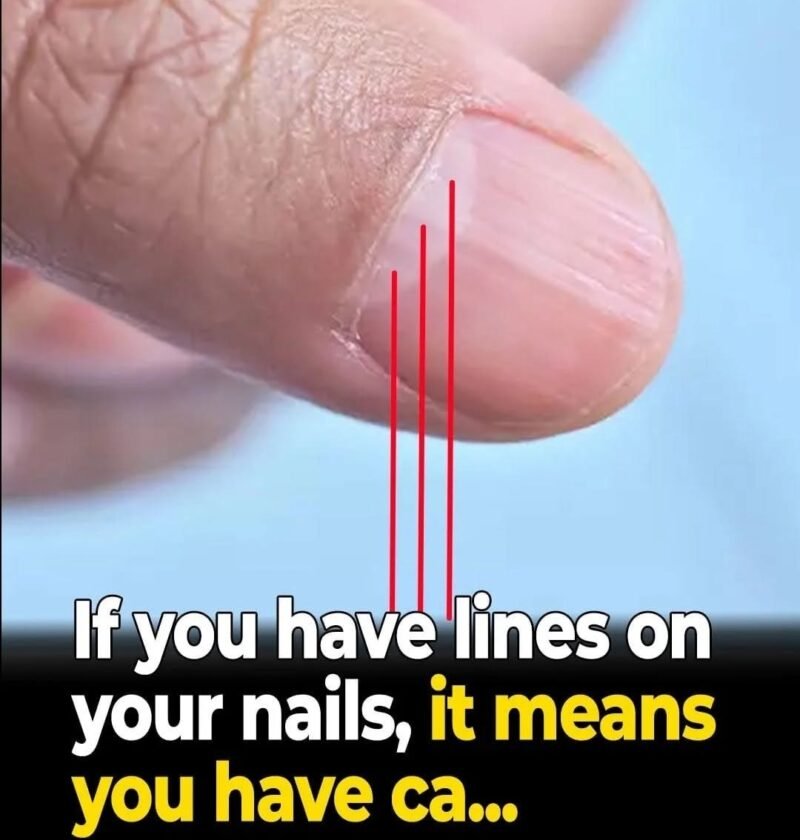
Fingernails often act as a window into your overall health. Dermatologists and primary care physicians frequently look at nail texture and color changes to spot clues about past illnesses, nutritional gaps, or systemic conditions.
The lines that appear on fingernails generally fall into two distinct categories: vertical lines and horizontal lines. Knowing the difference can help you determine when to relax and when to call a doctor.
1. Vertical Lines (Running from Cuticle to Tip)
If you notice thin lines running up and down your nails, you are definitely not alone.
-
The Harmless Cause (Aging): Most of the time, vertical ridges are a completely normal part of the natural aging process—much like getting fine lines on your skin. They tend to become more prominent as we get older because the nail matrix slows down its cell turnover.
-
When to Pay Attention: If the ridges are accompanied by splitting, brittleness, or a change in nail shape (such as becoming spoon-shaped or concave), they can occasionally point toward underlying nutritional gaps (like iron or vitamin B12 deficiencies) or dermatological conditions like eczema or dry skin.
2. Horizontal Lines or Dents (Beau’s Lines)
Deep grooves or depressions that run straight across the width of the nail are medically known as Beau’s lines.
-
What They Mean: These lines happen when something temporarily pauses or severely slows down your nail’s growth. Because fingernails grow slowly (about 3 millimeters a month), a horizontal dent is essentially a historical timestamp of a physiological stress event that occurred weeks or months prior.
-
Common Triggers:
-
A severe illness with a high fever (such as pneumonia, severe flu, or COVID-19)
-
Significant physical trauma or a direct injury to the nail bed
-
Major physiological or emotional stress
-
Certain medications or treatments, such as chemotherapy
-
-
When to Pay Attention: If you experience repeating Beau’s lines across multiple nails with no obvious explanation (like a past major illness), it warrants a check-up to rule out chronic systemic issues, thyroid disorders, or metabolic stress.
3. The Urgent Red Flag: Dark Vertical Lines
While regular vertical ridges are typically benign, a dark vertical stripe, band, or streak running down the length of the nail (especially if it is new, widening, or causing pigment to bleed into the surrounding skin) is an exception that requires prompt medical evaluation.
-
Why it matters: A dark streak can occasionally be a sign of acral lentiginous melanoma, a serious form of skin cancer that can develop underneath the nail bed. Not every dark line is melanoma (they can sometimes be harmless moles or caused by minor trauma), but it is a symptom that should never be ignored or brushed off as a simple bruise.
Summary Checklist: When to See a Doctor
While most minor nail texturing can be managed with gentle care (like moisturizing cuticles and avoiding harsh chemical exposure), you should consult a doctor or dermatologist if you notice:
-
A dark brown or black vertical stripe under the nail.
-
Deep horizontal grooves that keep appearing repeatedly without an obvious cause.
-
Nails changing shape (becoming deeply curved, spoon-shaped, or clubbed).
-
Nails lifting away from the nail bed alongside pain, swelling, or redness.