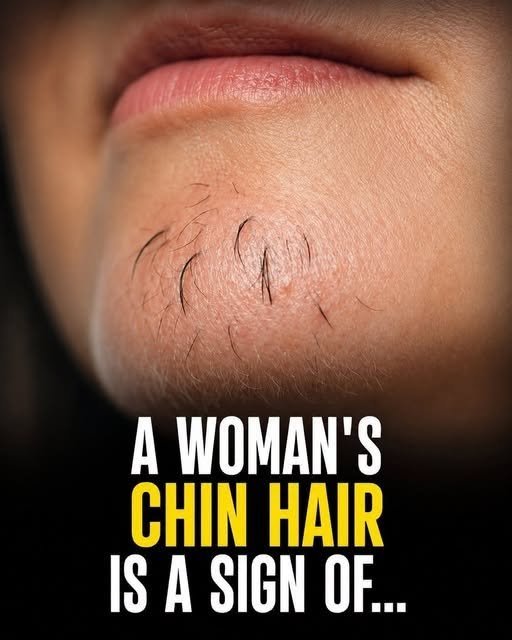
When a woman notices coarse, dark, or stubborn hair sprouting on her chin, it is often a startling and frustrating discovery. While societal beauty standards tend to frame facial hair in women as a purely cosmetic nuisance, dermatologists and endocrinologists view it as an important diagnostic sign.
Your hair follicles—especially those on the face, chest, and abdomen—are remarkably sensitive to hormonal shifts. Here is what your body is usually trying to tell you when chin hair appears, ranging from harmless everyday variations to underlying endocrine signals.
1. Natural Aging and Menopausal Hormonal Shifts
-
What it means: As women transition through perimenopause and menopause, the ovaries gradually produce less estrogen and progesterone. Meanwhile, the adrenal glands continue producing male hormones (androgens, like testosterone) at relatively steady levels.
-
The effect: This shift creates an altered hormone ratio where androgens become more dominant. Even a mild hormonal imbalance can cause fine vellus hairs on the chin to coarsen, darken, and grow faster.
2. Polycystic Ovary Syndrome (PCOS)
-
What it means: PCOS is one of the most common endocrine disorders affecting reproductive-aged women, characterized by hormonal imbalances, irregular periods, and small fluid-filled sacs (cysts) on the ovaries.
-
The effect: Women with PCOS experience elevated levels of circulating androgens (hyperandrogenism). This commonly triggers hirsutism—the medical term for excessive, male-pattern hair growth on the face, chin, chest, or back—often accompanied by acne, stubborn weight changes, or thinning scalp hair.
3. Genetics and Ethnic Predisposition
-
What it means: Sometimes, chin hair has nothing to do with internal disease or abnormal hormones.
-
The effect: Genetics play a massive role in hair density and distribution. Women of Mediterranean, Middle Eastern, South Asian, or Hispanic descent naturally possess higher baseline hair density and are genetically more prone to developing coarse chin or facial hairs, regardless of their hormone levels.
4. Insulin Resistance and Blood Sugar Fluctuations
-
What it means: When cells become resistant to insulin, the pancreas pumps out higher amounts of insulin to compensate.
-
The effect: Excess insulin stimulates the ovaries to produce more testosterone and androgens. This is why insulin resistance (often linked to prediabetes, metabolic syndrome, or weight gain around the abdomen) frequently correlates with unwanted facial hair growth.
5. Rare Adrenal Gland Disorders
-
What it means: Conditions that affect the adrenal glands (which sit just above your kidneys), such as non-classic congenital adrenal hyperplasia or rare cortisol-producing tumors, can cause a sudden surge in androgen production.
-
The effect: If chin hair appears very suddenly, grows aggressively, and is accompanied by rapid physical changes, doctors will look closely at adrenal function.
When to Consult a Doctor
A stray chin hair or two as you age is entirely normal and usually requires nothing more than plucking, waxing, or laser hair removal. However, you should schedule an evaluation with your primary care doctor, gynecologist, or an endocrinologist if your chin hair growth is:
-
Sudden and aggressive: Sprouting rapidly over a few weeks or months.
-
Accompanied by other symptoms: Such as irregular or missed menstrual periods, cystic adult acne, rapid weight gain, deepening of the voice, or hair thinning on your scalp.