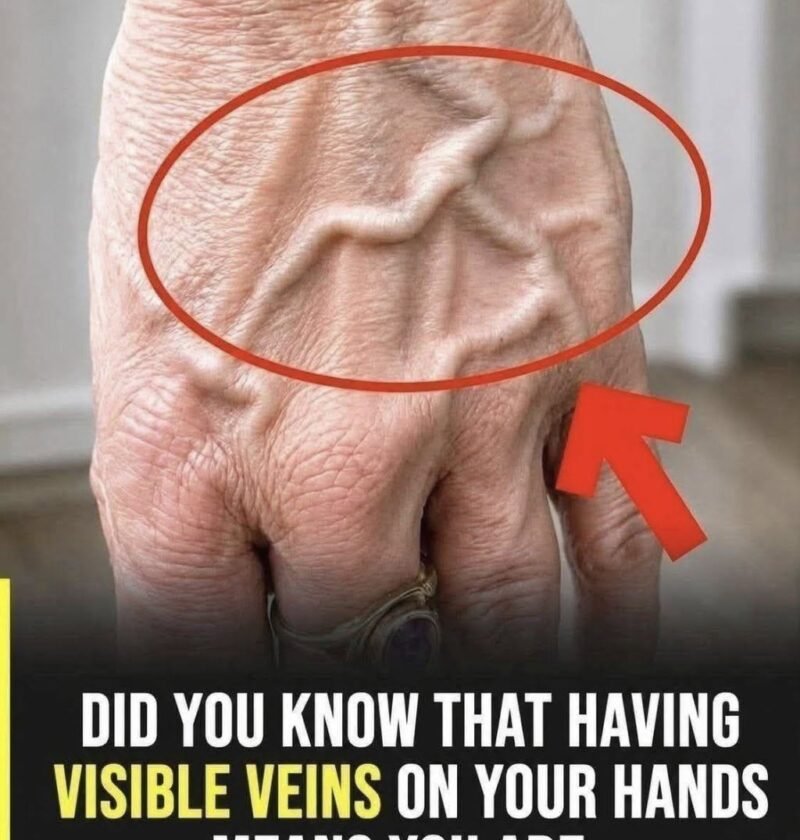
Clickbait headlines love to tease dramatic meanings behind having visible veins—claiming it either means you have “elite fitness” or some terrifying hidden health issue.
The physiological truth, however, is a fascinating mix of body composition, genetics, and normal circulation.
Here is what your veins popping or showing more prominently actually means, broken down by science.
1. Low Body Fat and High Muscle Tone (Fitness)
If you see prominent veins running across your arms, hands, shoulders, or legs, it is most commonly a sign of low subcutaneous body fat.
-
How it works: Everyone has a vast network of veins just beneath their skin. When you have a higher layer of body fat, it acts like a blanket, masking those blood vessels. As your body fat percentage drops (especially below ~10–12% for men or ~18–20% for women), that insulating layer thins out, allowing the veins to become clearly visible on the surface.
-
The “Vascularity” Factor: Strength training also causes muscles to push outward while increasing blood flow, temporarily making veins swell and stand out even more.
2. Genetics and Skin Tone
You don’t have to be an elite athlete to have visible veins. Genetics play a massive role:
-
Skin Translucency: People with fair or thin skin naturally show underlying veins much more easily than those with thicker or more pigmented skin.
-
Anatomy: Some people are simply born with superficial vein networks that sit closer to the skin’s surface, particularly on the hands, feet, and temples.
3. Heat, Hydration, and Blood Pressure
Temporary changes in how visible your veins are can be driven by your environment:
-
Heat: When your body gets hot (during a workout, a hot summer day, or a sauna), your blood vessels dilate (expand) through a process called vasodilation to help release heat. This pushes blood closer to the surface and makes veins pop.
-
Hydration and Blood Pressure: High fluid intake or elevated blood pressure during physical exertion temporarily increases blood volume, putting slight pressure on vessel walls and making them stand out.
When Should You Pay Attention to Visible Veins?
While surface veins from fitness or fair skin are completely normal, certain types of visible veins require medical evaluation:
-
Varicose Veins: If veins in your legs become twisted, bulging, dark purple, or rope-like, accompanied by aching, heaviness, or swelling, it indicates venous insufficiency (weakened valves inside the veins allowing blood to pool).
-
Spider Veins: Small, web-like clusters of red or blue capillaries near the surface, often caused by genetics, hormonal shifts, or prolonged standing.
💡 The TakeawayHaving visible veins on your hands or arms is usually just a normal combination of genetics, hydration, and lower body fat—not a secret medical emergency!
Do you notice your veins popping more when you exercise or in the heat, or were you wondering about a specific type of vein appearance?