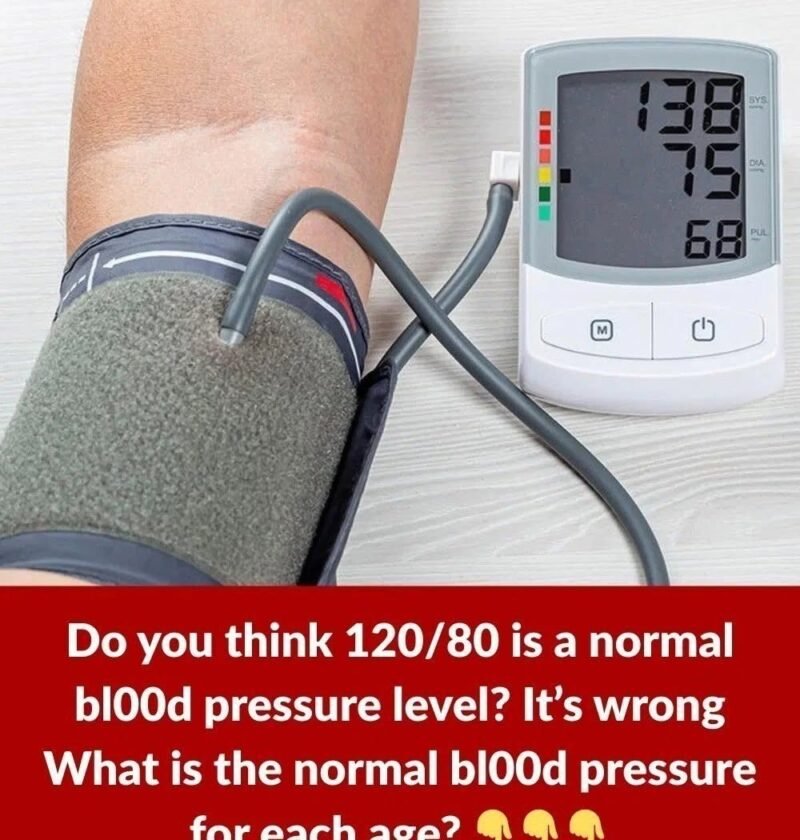
When looking at blood pressure across different ages, modern clinical guidelines (such as those from the American Heart Association and American College of Cardiology) take a surprisingly straightforward approach: for all adults (aged 18 and older), the target normal blood pressure is less than 120/80 mmHg.
While it is true that average blood pressure naturally creeps up as we age—due to arteries naturally losing some of their youthful elasticity—a higher average for a certain age does not mean it is clinically healthy.
Adult Blood Pressure Categories (Ages 18+)
Regardless of whether you are 20, 50, or 80 years old, adult blood pressure readings generally fall into these standard categories:
| Category | Systolic (Top Number) | Diastolic (Bottom Number) | What It Means | |
| Normal | Less than 120 | and | Less than 80 | Ideal target for all adults. |
| Elevated | 120–129 | and | Less than 80 | Not high yet, but a warning sign that it could trend upward. |
| Stage 1 Hypertension | 130–139 | or | 80–89 | High blood pressure; lifestyle changes are typically recommended. |
| Stage 2 Hypertension | 140 or higher | or | 90 or higher | Clearly elevated high blood pressure requiring medical management. |
| Hypertensive Crisis | Higher than 180 | and/or | Higher than 120 | Emergency: Seek immediate medical attention. |
How Blood Pressure Ranges Shift by Life Stage
1. Infants and Children (Ages 0 to 12)
Unlike adults, children have much smaller bodies and growing arteries, so their “normal” ranges depend heavily on age, height, and gender percentiles calculated by pediatricians.
-
Newborns: Typically average around 60–90 / 20–60 mmHg. (Much lower because their vascular resistance is minimal).
-
School-Aged Children (6–11): Typically average around 97–112 / 57–71 mmHg.
2. Teenagers and Adolescents (Ages 13 to 18)
During adolescence, blood pressure steadily approaches adult levels.
-
Normal Range: Generally anything below 120/80 mmHg. Readings consistently reaching or exceeding 130/80 mmHg in older teens are flagged as elevated or hypertensive.
3. Young Adults (Ages 18 to 39)
-
The Goal: < 120/80 mmHg
-
What to watch: While averages hover around 115/75 mmHg, this is the prime window where lifestyle factors (stress, sodium intake, lack of exercise) start laying the groundwork for future cardiovascular health. Monitoring a creeping diastolic (bottom) number is especially crucial in this age group.
4. Middle Age (Ages 40 to 59)
-
The Goal: < 120/80 mmHg
-
What to watch: Averages naturally drift closer to 125–130/80+ mmHg as blood vessels stiffen slightly. However, crossing into 130/80+ consistently marks a transition into Stage 1 Hypertension. Hormonal shifts (such as perimenopause and menopause in women) often cause blood pressure to accelerate rapidly during these decades.
5. Older Adults (Ages 60 and Beyond)
-
The Goal: While clinical targets for older adults sometimes allow for a slightly more individualized threshold (often keeping systolic pressure under 130 or 140 depending on overall health and frailty), aiming for under 120/80 mmHg remains the gold standard for preventing strokes and cognitive decline.
-
What to watch: Isolated systolic hypertension (where the top number is high—e.g., 145—while the bottom number stays low—e.g., 70) is very common in seniors due to stiffened main arteries. Both numbers matter, but managing the top number is critical for reducing stroke risk.