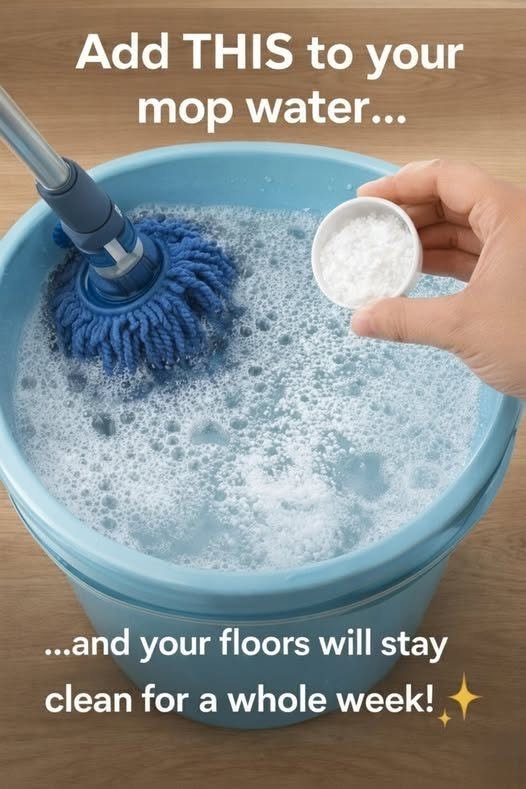
🧹 The Floor-Cleaning Trick You’ll Wish You Knew Sooner
If you’re referring to the viral trick of adding a household ingredient to mop water, be careful: there isn’t one universal mixture that’s safe for every type of flooring.
A simple, low-risk approach for many sealed floors is:
✨ The basic method
- Vacuum or sweep first to remove grit and dust.
- Add a small amount of pH-neutral floor cleaner to warm water, following the product’s label.
- Use a well-wrung microfiber mop rather than soaking the floor.
- Rinse the mop frequently so you’re not spreading dirty water around.
- Allow the floor to dry naturally or wipe it dry with a clean microfiber cloth.
Match the method to the floor
- Tile/porcelain: Generally tolerates damp mopping well.
- Sealed wood: Use very little water and a cleaner specifically made for wood.
- Laminate: Avoid excess water; moisture can damage seams.
- Natural stone: Avoid vinegar, lemon juice, and other acids because they can etch surfaces such as marble and limestone.
- Unsealed floors: Check the manufacturer’s cleaning recommendations before using any homemade solution.
🚫 Don’t mix cleaning chemicals
Never combine bleach with vinegar, ammonia, or other cleaners. Dangerous gases can form.
If the “floor trick” you’re referring to uses a specific ingredient—such as vinegar, baking soda, dish soap, or laundry detergent—tell me what it is and what kind of floor you have, and I can tell you whether the trick is actually safe and effective.