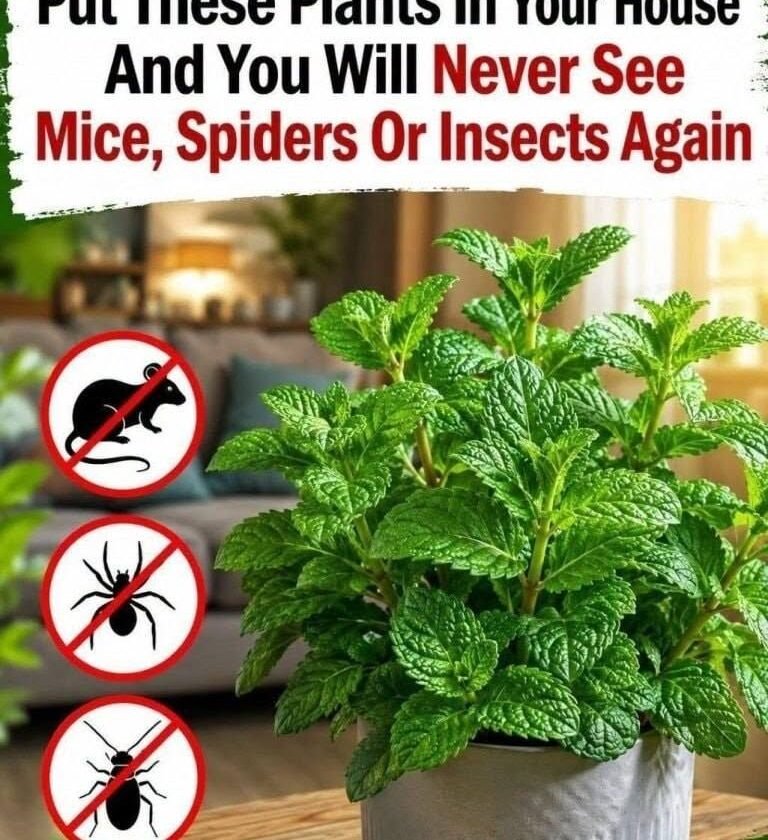
Plants contain strong essential oils and pungent scents that disrupt the delicate smell and navigational senses of household pests. Here are 8 top plants that naturally ward off mice, spiders, and insects:
1. Peppermint (Mentha × piperita)
-
Repels: Mice, spiders, ants, mosquitoes, and fleas.
-
How it works: Peppermint contains high concentrations of menthol. The intense aroma overpowers mice’s keen sense of smell and irritates spiders and crawling insects.
-
How to use: Plant in pots near entryways or windowsills (it spreads aggressively in garden beds).
2. Lavender (Lavandula)
-
Repels: Spiders, mice, moths, mosquitoes, and flies.
-
How it works: Lavender leaves and flowers contain linalool and linalyl acetate—compounds humans find relaxing, but pests find overwhelming.
-
How to use: Place potted lavender on sunny patios or hang dried lavender sachets in closets and near doorways.
3. Marigolds (Tagetes)
-
Repels: Mosquitoes, aphids, whiteflies, squash bugs, and rodents.
-
How it works: Marigolds release alpha-terthienyl, a compound commonly used in commercial insect repellents. Their distinct scent keeps garden insects and small rodents away.
-
How to use: Plant around the perimeter of garden beds, patio borders, or near doorways.
4. Rosemary (Rosmarinus officinalis)
-
Repels: Spiders, mosquitoes, flies, and beetles.
-
How it works: The intense woody, resinous aroma of rosemary essential oils acts as a natural deterrent to airborne insects and spiders seeking shelter.
-
How to use: Keep potted rosemary indoors near sunny windows or outside on patio tables.
5. Eucalyptus
-
Repels: Mice, rats, spiders, mosquitoes, and flies.
-
How it works: Rich in eucalyptol, eucalyptus emits a sharp, camphor-like scent that interferes with rodents’ scent-marking trails and repels arachnids.
-
How to use: Grow dwarf potted eucalyptus plants near entrances or spray eucalyptus essential oil diluted with water around baseboards.
6. Chrysanthemums (“Mums”)
-
Repels: Ants, roaches, spiders, ticks, fleas, and bedbugs.
-
How it works: Chrysanthemums naturally produce pyrethrins, a compound widely extracted for commercial organic insecticides. It attacks the nervous systems of crawling insects.
-
How to use: Place potted mums around porch steps, entry doorways, and garden borders.
7. Basil
-
Repels: Houseflies, mosquitoes, and spiders.
-
How it works: Basil contains essential oils like estragole and eugenol, which mask environmental scents insects use to locate hosts and food sources.
-
How to use: Grow potted basil on kitchen windowsills, dining areas, or outdoor patio tables.
8. Catnip (Nepeta cataria)
-
Repels: Cockroaches, mosquitoes, mice, and termites.
-
How it works: Catnip contains nepetalactone, an essential oil proven in laboratory studies to be up to 10 times more effective at repelling mosquitoes than DEET, while also deterring rodents.
-
How to use: Plant in outdoor containers around foundation perimeter beds.
Pest Repelling Summary
| Plant | Primary Targets | Key Active Component |
| Peppermint | Mice, Spiders, Ants | Menthol |
| Lavender | Spiders, Moths, Mosquitoes | Linalool |
| Marigolds | Mosquitoes, Garden Pests, Mice | Alpha-terthienyl |
| Rosemary | Spiders, Mosquitoes, Beetles | Rosmarinic Acid & Resins |
| Eucalyptus | Mice, Rats, Spiders | Eucalyptol |
| Chrysanthemum | Ants, Ticks, Fleas, Roaches | Pyrethrins |
| Basil | Flies, Mosquitoes | Estragole & Eugenol |
| Catnip | Mosquitoes, Roaches, Mice | Nepetalactone |