How to Pick the Sweetest Watermelon Every Time
You can’t know a watermelon’s exact sweetness from the outside, but a few clues can improve your odds considerably.
- Look for a large, creamy-yellow field spot. This is the area where the melon rested on the ground. A yellow or orange-yellow spot generally indicates it had time to mature on the vine; a very pale or white spot can be a less promising sign.
- Choose one that feels heavy for its size. More weight usually means more water, which is a useful freshness clue.
- Look for a dull, rather than shiny, rind. A shiny exterior can indicate a less mature melon, although appearance varies by variety.
- Check the shape. Pick a watermelon that is fairly symmetrical and well-developed, without major dents, soft spots, bruises, or cracks.
- Don’t rely too much on the “thump test.” People often recommend listening for a deep, hollow sound, but this is subjective and isn’t a reliable way to measure sweetness.
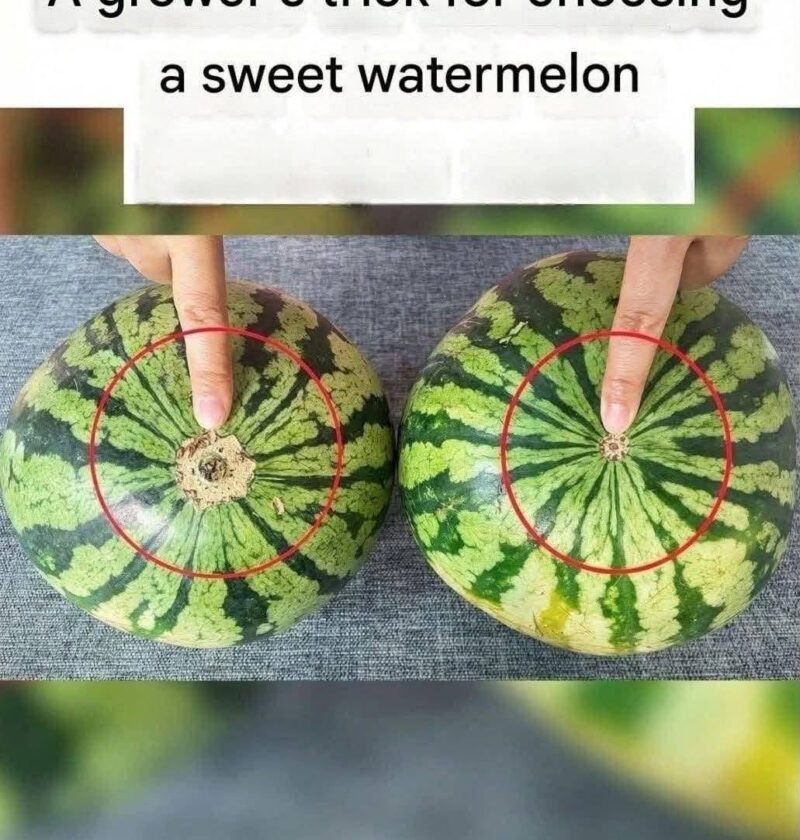
- Don’t assume the stem must be brown. Stem appearance can provide clues, but it isn’t a dependable sweetness test once the fruit has been harvested.
The easiest rule to remember
Heavy + symmetrical + creamy-yellow field spot + firm, undamaged rind = a good bet.
And if you’re buying pre-cut watermelon, look for flesh that is firm, juicy, and brightly colored rather than mushy, dried out, or leaking.


