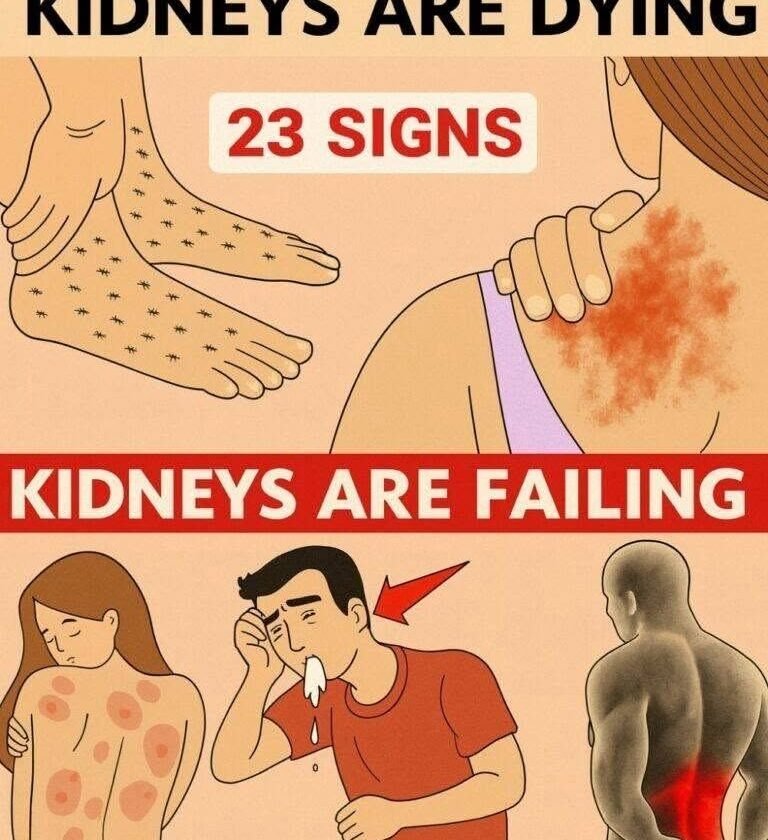
23 Signs Your Kidneys Might Be in Trouble
Kidney disease can develop quietly, and many people have few or no symptoms until kidney function has already declined. The signs below can have many other causes, so none of them alone proves that your kidneys are failing.
Urinary changes
-
Urinating much more often, particularly at night.
-
Urinating much less than usual.
-
Foamy or persistently bubbly urine, which can sometimes indicate excess protein.
-
Blood or pink/red urine.
-
Dark or unusually cloudy urine.
-
Pain or burning when urinating—often caused by a urinary infection rather than kidney disease itself.
-
Difficulty starting or maintaining urine flow.
Changes elsewhere in the body
-
Swelling in the ankles, feet, legs, hands, or around the eyes from fluid retention.
-
Unexplained fatigue or weakness.
-
Loss of appetite.
-
Nausea or vomiting.
-
Unintentional weight loss.
-
Itchy or unusually dry skin.
-
Muscle cramps or twitching.
-
Headaches or difficulty concentrating.
-
Sleep problems or unusual daytime sleepiness.
-
Shortness of breath, particularly when fluid builds up or anemia develops.
-
High blood pressure that is new or difficult to control.
-
Puffiness around the eyes, particularly in the morning.
-
Metallic taste or unusual taste in the mouth.
-
Persistent bad breath or an ammonia-like taste/odor.
-
Feeling unusually cold, which can occur with anemia associated with advanced kidney disease.
-
Confusion or significant changes in alertness in severe kidney dysfunction.
Important: symptoms aren’t enough to diagnose kidney disease
Some of these symptoms—especially fatigue, swelling, urinary changes, and high blood pressure—can occur with many conditions. Early chronic kidney disease often causes no noticeable symptoms at all.
If you’re at increased risk because of diabetes, high blood pressure, cardiovascular disease, a family history of kidney disease, or previous kidney problems, ask your clinician about kidney testing. Common tests include a blood creatinine/eGFR measurement and a urine albumin-to-creatinine ratio (ACR).
🚨 Seek urgent care
Get immediate medical attention for very little or no urine, severe shortness of breath, severe swelling, confusion, persistent vomiting, or blood in the urine with severe pain.
Bottom line: Don’t wait for a long list of symptoms before checking your kidneys. Simple blood and urine tests can detect kidney problems much earlier than symptoms often do.