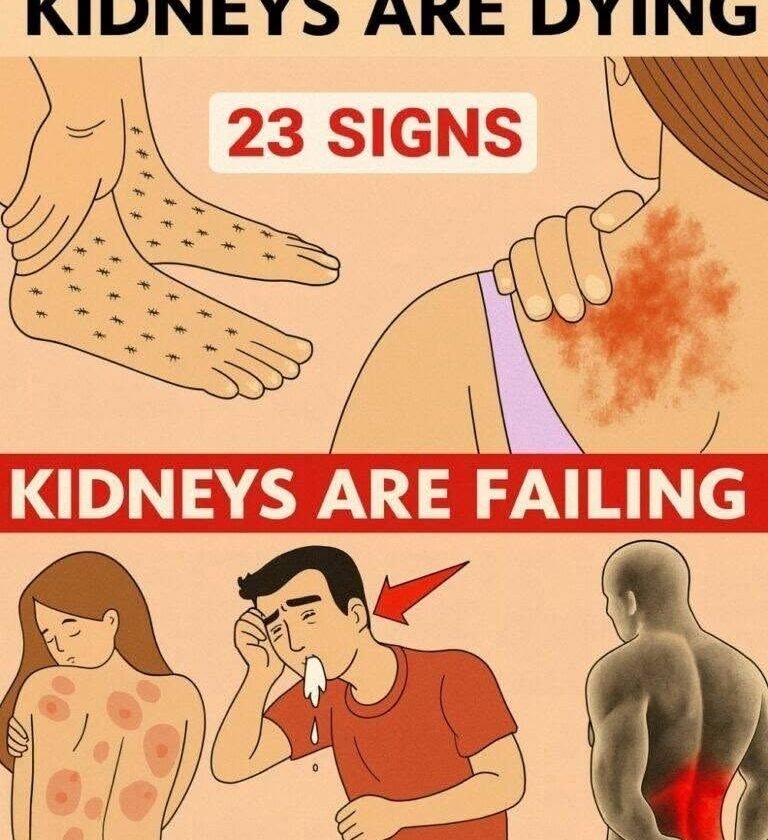
23 Signs Your Kidneys Might Be in Trouble
One important correction to this kind of headline: early kidney disease often causes no noticeable symptoms. The only way to know for sure is through testing. However, kidney problems can cause a range of symptoms as they progress.
-
Foamy urine — can indicate protein leaking into the urine.
-
Blood in the urine — urine may appear pink, red, or cola-colored.
-
More frequent urination, particularly at night.
-
Much less urine than usual.
-
Swelling around the ankles and feet.
-
Puffy eyes, especially after waking.
-
Unexplained fatigue or weakness.
-
Difficulty concentrating or “brain fog.”
-
Poor appetite.
-
Nausea or vomiting.
-
Unexplained weight loss.
-
Persistent itching.
-
Dry skin.
-
Muscle cramps.
-
Muscle weakness.
-
Shortness of breath, particularly when excess fluid accumulates.
-
High blood pressure.
-
Flank or side pain — more suggestive of problems such as kidney stones or infection than ordinary chronic kidney disease.
-
Cloudy or unusually dark urine.
-
Pain or burning while urinating — often associated with urinary infection.
-
Fever and chills with flank pain — possible kidney infection.
-
Metallic taste or changes in taste.
-
Sleep problems or restless legs, which can occur with advanced kidney disease.
🩺 The tests matter more than symptoms
Because kidney disease can be silent, people at higher risk—particularly those with diabetes, high blood pressure, cardiovascular disease, or a family history of kidney disease—should discuss screening with a healthcare professional.
Two important tests are:
-
eGFR/creatinine blood test — assesses kidney filtration.
-
Urine albumin-to-creatinine ratio (UACR) — checks for abnormal protein leakage.
🚨 Get urgent medical help
Seek prompt medical attention for almost no urine, severe shortness of breath, severe swelling, confusion, or blood in the urine with severe pain or illness.
Most importantly, don’t assume that any one of these symptoms means kidney disease. Many have other, much more common explanations.