5 Signs of
a “Mini-Stroke” (TIA) in Older Adults
A transient ischemic attack (TIA) is sometimes called a “mini-stroke.” It occurs when blood flow to part of the brain is
temporarily disrupted, producing stroke-like symptoms that may resolve. A TIA is an emergency warning, not something to wait out.
The key signs are usually sudden:
-
Face drooping or numbness — particularly on one side.
-
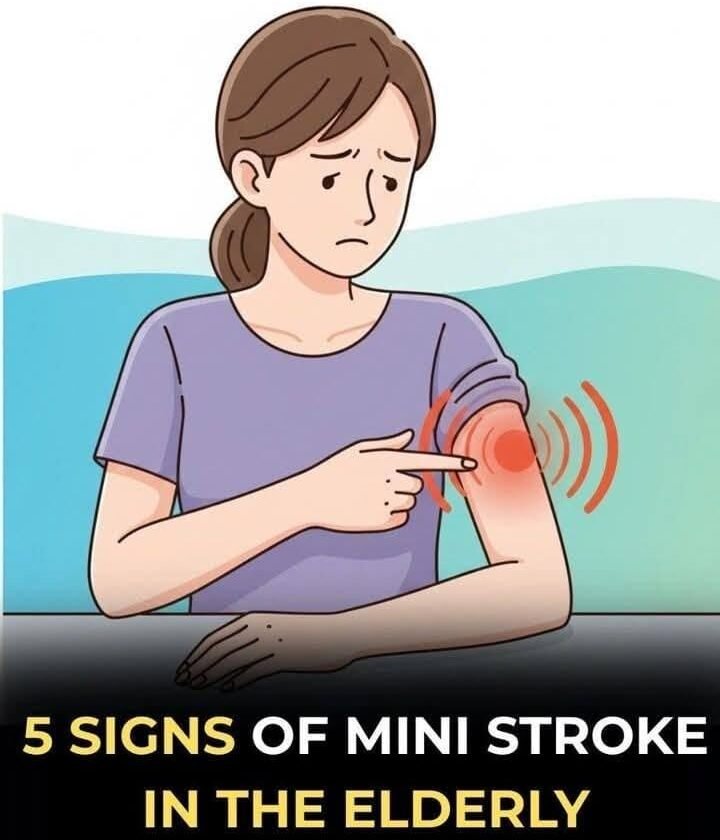
Arm or leg weakness/numbness — especially affecting one side of the body.
-
Speech problems — suddenly slurring words, having trouble speaking, or difficulty understanding others.
-
Sudden vision changes — loss, blurring, or double vision in one or both eyes.
-
Sudden loss of balance or coordination — dizziness, difficulty walking, or unexplained unsteadiness.
A sudden, severe unexplained headache can also occur with stroke and should be treated seriously.
The most important point
Don’t wait for symptoms to disappear. TIA symptoms can last only minutes, but they can precede a major stroke. Emergency evaluation is needed even if the person feels completely normal again.
Remember BE FAST:
-
B — Balance: sudden loss of balance
-
E — Eyes: sudden vision changes
-
F — Face: facial drooping
-
A — Arm: weakness or numbness
-
S — Speech: speech difficulty
-
T — Time: call emergency medical services immediately
If any of these symptoms are happening right now, seek emergency medical care immediately and note when the symptoms started or when the person was last known to be well.