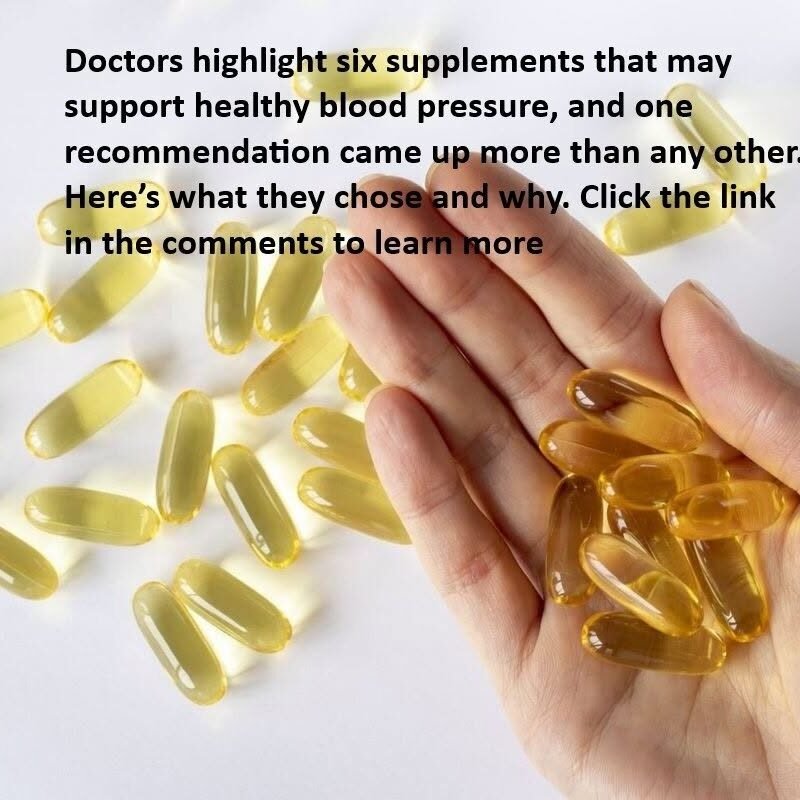
That claim is partly based on real evidence, but the “one recommendation came up more than any other” wording is misleading. There is no single supplement that doctors universally recommend for everyone with high blood pressure.
Six supplements/nutrients commonly discussed
- Potassium — probably the most important nutrient on the list. Increasing potassium, preferably through foods, can help lower blood pressure by counteracting sodium. However, potassium supplements can be dangerous for people with kidney disease or those taking certain medications. www.heart.org+1
- Magnesium — may produce a modest reduction in blood pressure, particularly when intake is inadequate, but it isn’t a substitute for proven treatment.
- Omega-3 fatty acids — some evidence suggests EPA/DHA can modestly lower blood pressure, although the optimal dose and who benefits most remain uncertain. American Heart Association
- Coenzyme Q10 (CoQ10) — has been studied for blood pressure, but evidence isn’t strong enough to make it a standard hypertension treatment.
- Garlic preparations — some studies suggest a modest blood-pressure effect, but products and doses vary considerably.
- Fiber/prebiotic supplements — emerging current AHA/ACC guideline specifically recommends increasing dietary potassium, reducing sodium, exercising, maintaining a healthy weight, and following a heart-healthy diet evidence suggests potential benefits, but they’re not established replacements for standard hypertension treatment. professional.heart.org
🏆 What would I choose?
Rather than taking a “blood-pressure supplement,” increase potassium-rich foods and follow a DASH-style eating pattern, unless your doctor has told you to restrict potassium. The current AHA/ACC guideline specifically recommends increasing dietary potassium, reducing sodium, exercising, maintaining a healthy weight, and following a heart-healthy diet. professional.heart.org+1
Examples of potassium-rich foods include beans, lentils, potatoes, spinach, yogurt, bananas, and many fruits and vegetables.
Important: Don’t start potassium supplements on your own. Too much potassium can cause dangerous heart-rhythm problems, particularly with kidney disease or certain blood-pressure medications. www.heart.org
And supplements should not replace prescribed blood-pressure medication. The AHA specifically cautions that supplements and “natural” remedies aren’t substitutes for proven treatment. www.heart.org