💧 What Happens to Your Body If You Don’t Drink Enough Water?
Your body needs water to regulate temperature, maintain blood volume, support digestion, and help your kidneys remove waste. When you lose more fluid than you replace, dehydration can develop.
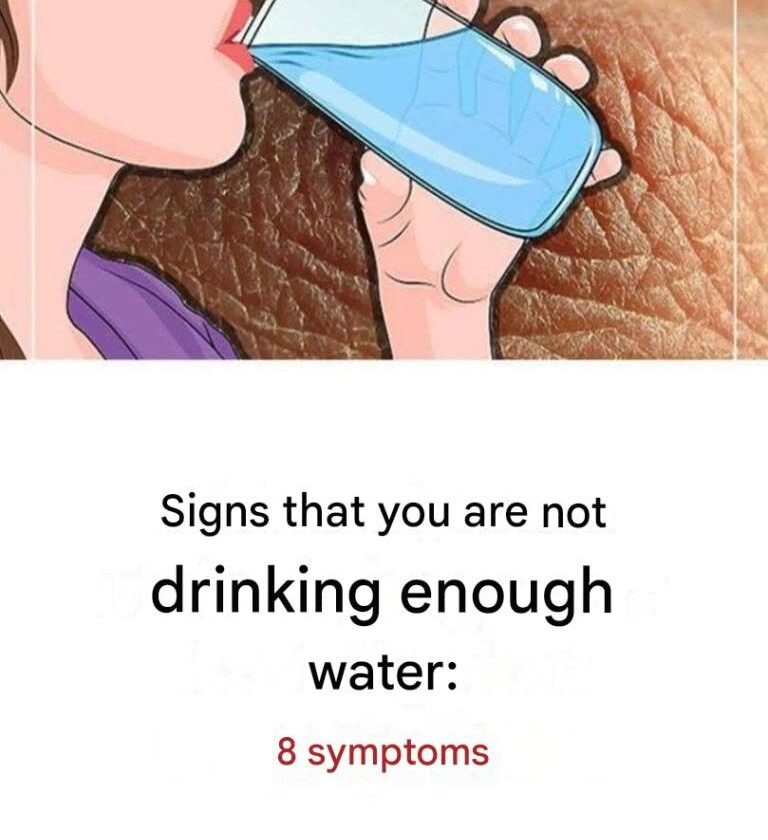
8 common signs
- Thirst — one of the earliest signals that you need fluids.
- Dark yellow urine — urine often becomes more concentrated as your body conserves water.
- Dry mouth and lips — saliva production can decrease.
- Headache — dehydration can contribute to headaches.
- Dizziness or lightheadedness — particularly when standing.
- Tiredness and weakness — even mild dehydration can affect how you feel and perform physically.
- Urinating less often — the kidneys conserve water when fluid is low.
- Difficulty concentrating — dehydration can affect mental performance, particularly when it becomes more significant.
🥤 How much water do you need?
There isn’t one amount that’s right for everyone. Your needs depend on body size, activity, climate, diet, illness, and medications. Water from food and other beverages also counts.
Rather than forcing yourself to drink enormous amounts, drink regularly and respond to thirst. People with certain heart, kidney, or liver conditions may have specific fluid limits and should follow their clinician’s advice.
🚨 Signs of severe dehydration
Confusion, fainting, inability to keep fluids down, very little or no urine, extreme weakness, or rapid breathing/heartbeat can indicate serious dehydration and require urgent medical attention.
If dehydration occurs because of heavy sweating, vomiting, or diarrhea, replacing electrolytes as well as fluids may sometimes be important.